


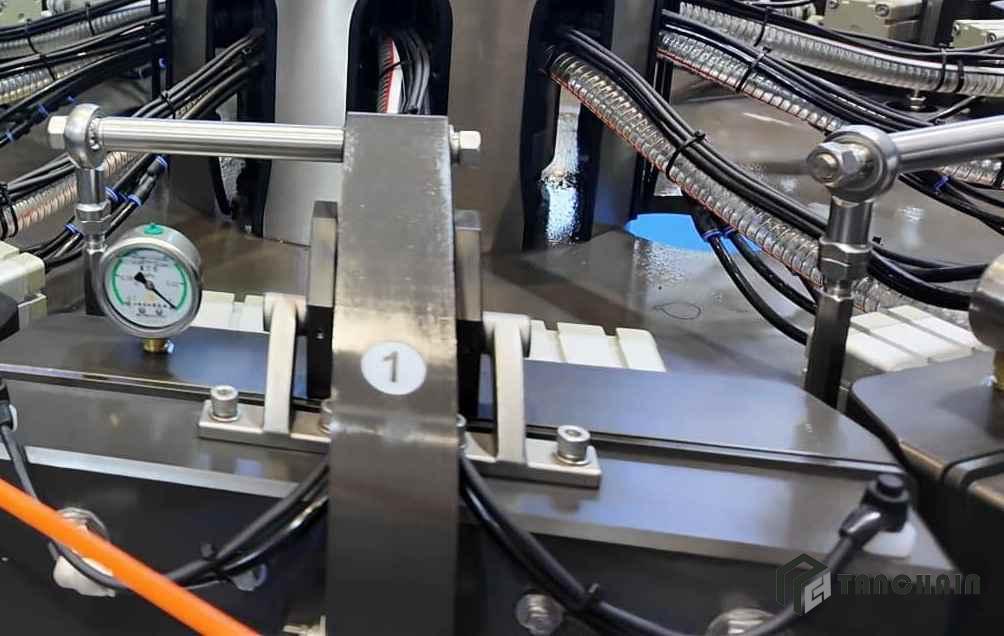
Carbon fiber composites are finding a firm foothold in food and beverage processing, where hygiene, corrosion resistance, and cleanability matter as much as strength. Unlike painted steel or aluminum, carbon fiber reinforced polymer (CFRP) does not rust, does not shed metallic particles, and can be molded into smooth, seamless shapes that are easy to wash down. For plant engineers and equipment builders, carbon fiber has become a practical way to cut weight, extend service life, and meet the strict cleaning and safety standards of modern food production.
This article explains where carbon fiber and other high-performance fibers are used across food and beverage processing, what problems they solve, and how buyers should evaluate material choices for their own lines.
1. Why Food and Beverage Plants Need Advanced Materials
Food processing is one of the harshest environments for equipment. Production areas are washed daily with hot water, caustic cleaners, and acid sanitizers. Equipment must resist corrosion, withstand repeated thermal cycling, and stay free of crevices where bacteria can grow. At the same time, plants are under pressure to reduce downtime, lower energy use, and move parts faster without losing precision.
Traditional materials each carry a trade-off. Stainless steel is hygienic but heavy, especially on moving and overhead parts. Aluminum is light but corrodes and can dent. Plastics are cleanable but often lack stiffness. Carbon fiber composites combine low weight with high stiffness and excellent chemical resistance, which makes them attractive for a growing list of processing applications.
They resist water, steam, and most food-grade cleaning chemicals without corroding.
They deliver high stiffness at a fraction of the weight of stainless steel.
They can be molded into smooth, seamless, easy-to-clean geometries.
They damp vibration, which protects product quality on filling and conveying lines.
2. Where Carbon Fiber Is Used in Food and Beverage Processing
Carbon fiber is not limited to one corner of the plant. Because it can be supplied as fabric, prepreg, tube, sheet, or finished part, it adapts to many points along the production line, from raw material handling through packaging.
2.1 Conveying and Product Handling
Conveyor systems run all day in wet, sanitized conditions. Carbon fiber rollers, guide rails, and lightweight frame sections reduce the load on drive motors and bearings, which lowers energy use and cuts wear. Because the material does not corrode, carbon fiber conveyor components keep their dimensional accuracy far longer than steel in washdown areas. Carbon fiber end effectors and grippers on pick-and-place robots also move faster with less inertia, improving throughput on high-speed packaging lines.
2.2 Filling, Capping, and Packaging Machinery
High-speed filling and capping machines depend on lightweight, rigid moving parts. Carbon fiber star wheels, transfer arms, and changeover components reduce the moving mass of the machine, allowing faster acceleration and more accurate positioning. Lower vibration means fewer misfills, less product spillage, and cleaner packaging. On rotary fillers, replacing steel with carbon fiber tube and plate can shorten cycle times while reducing motor and gearbox stress.
2.3 Pumps, Valves, and Fluid Handling
Food and beverage plants move liquids through pumps, valves, and pipework that see constant exposure to acids, sugars, and cleaning-in-place (CIP) chemicals. Carbon fiber housings and pump components resist corrosion and chemical attack, and their low weight simplifies maintenance and changeovers. Where high temperature and chemical resistance are both required, pre-oxidized fiber and aramid fiber are often used as gaskets, seals, and insulation around hot process lines.
2.4 Processing Equipment and Machinery Frames
Mixers, homogenizers, slicers, and fillers all benefit from rigid, lightweight structures. Carbon fiber machine frames and moving arms reduce vibration, hold tighter tolerances, and free up design space. Because composites can be formed into complex shapes, engineers can build hygienic frames with fewer joints and fasteners, reducing the number of places where food residue can collect.
2.5 Insulation, Sealing, and Fire Safety
Bakeries, roasteries, and fryer lines run hot. Pre-oxidized fiber felt and fabric are used as thermal insulation, heat shields, and fire barriers near ovens and fryers because they do not melt, drip, or sustain flame. Aramid fiber adds strength and abrasion resistance for gaskets, conveyor belting edges, and protective covers, helping plants meet fire-safety requirements while keeping equipment accessible for cleaning.
3. Matching Material Forms to the Application
Food and beverage processing covers a wide range of duties, from cold wet packing rooms to hot baking lines. The table below summarizes how different material forms are typically applied.
| Application area | Recommended material form | Key benefit | Typical duty |
|---|---|---|---|
| Conveyor rollers and guide rails | Carbon fiber tube and pultruded profile | Lightweight, corrosion-free, dimensionally stable | Continuous washdown |
| Robot end effectors and grippers | Carbon fiber sheet and molded parts | Low inertia, high stiffness, fast cycling | High-speed pick and place |
| Filling and capping components | Carbon fiber plate and machined parts | Reduced moving mass, precise positioning | High-speed packaging |
| Pump and valve housings | Carbon fiber composite parts | Chemical and corrosion resistance | Acid and CIP exposure |
| Machine frames and arms | Carbon fiber tube and laminate | Vibration damping, tight tolerances | Continuous operation |
| Oven and fryer insulation | Pre-oxidized fiber felt and fabric | Non-melting, flame resistant, low conductivity | High temperature |
| Gaskets, seals and covers | Aramid fiber fabric and yarn | Abrasion resistance, thermal stability | Heat and friction |
4. Engineering Benefits That Matter on the Line
Weight reduction is the most obvious benefit, but the real value of carbon fiber in food processing shows up in uptime and product quality. Lightweight moving parts put less stress on motors, bearings, and gearboxes, so maintenance intervals lengthen. Rigid, well-damped structures resist vibration, which keeps fill volumes accurate and reduces out-of-spec product. Corrosion resistance means parts keep their shape through years of daily sanitation instead of degrading and contaminating product.
Composites also give design freedom. Engineers can consolidate multiple metal parts into a single molded composite component, which means fewer fasteners, fewer crevices, and faster cleaning. In hygienic design, fewer joints directly translates to lower microbial risk and shorter CIP cycles.
5. Specification Checklist for Buyers
When sourcing carbon fiber components for a food and beverage line, plant engineers should confirm several points with the supplier:
Confirm the resin system is suitable for the cleaning chemicals and temperatures the part will actually see.
Verify the surface finish and whether the part can be supplied with a food-contact-compatible coating or liner.
Check that the design avoids crevices, sharp corners, and exposed fibers that could trap residue.
Ask for the temperature range, including short-term peaks during CIP or sterilization.
Request dimensional tolerances and flatness data for precision moving parts.
Confirm that aramid, pre-oxidized fiber, or other components meet relevant fire and thermal ratings.
Review the supplier's quality control and traceability for the materials supplied.
6. Trends Driving Adoption
Automation, higher line speeds, and tighter hygiene standards are all pushing processors toward lighter, more durable materials. As labor costs rise, plants invest in faster robotics and filling systems, where low-inertia carbon fiber parts pay back quickly. Energy costs and sustainability targets favor lightweight components that reduce motor load. Meanwhile, more processors are adopting hygienic design principles that reward seamless, corrosion-free composite structures.
Shanghai Tanchain New Material Technology supplies carbon fiber filament, staple fiber, fabric, prepreg, and finished composite parts, along with aramid fiber and pre-oxidized fiber for insulation and sealing duties. Our materials support food and beverage equipment builders who need components that stay clean, stay accurate, and stay in service. To review product options or request a quote, visit our product pages or contact our team directly.