


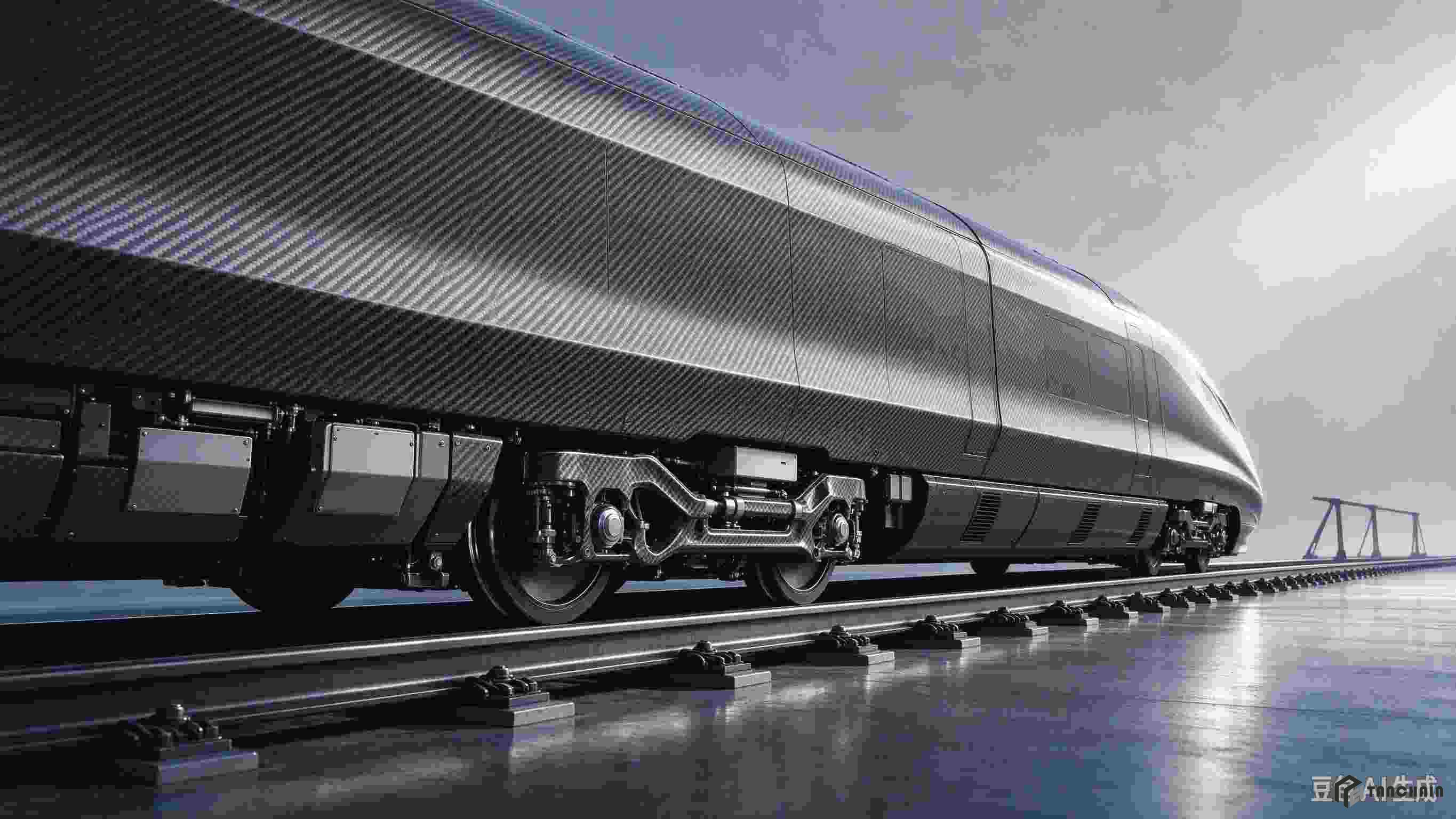
-
Carbon Fibre Applications in the Railway and Rolling Stock Industry
-
Carbon fibre composites are transforming the railway industry, cutting vehicle mass, raising stiffness and resisting fatigue and corrosion. This guide covers carbodies, bogie frames, interiors, pantographs, freight structures and trackside equipment.
Railway operators and rolling stock builders face a stubborn engineering equation: every kilogram carried in the train body must be accelerated, braked and supported thousands of times over a vehicle's service life. Reduce that mass and the whole system improves — lower traction energy, less track wear, shorter braking distances and higher payload per axle. This is the logic that has drawn the railway industry to carbon fibre composites. Where aluminium and steel once set the standard, carbon fibre reinforced polymer (CFRP) now offers the stiffness of steel at roughly a quarter of the weight, with excellent fatigue resistance, corrosion immunity and the ability to be tailored to the exact load path of a rail vehicle. This article maps how carbon fibre is used across the railway and rolling stock industry, component by component.
Why the Railway Industry Turns to Carbon Fibre
Rail is one of the most weight-sensitive transport modes in existence. Unlike a road vehicle, a train runs on a steel wheel and rail interface where unsprung and sprung mass directly affect ride quality, track forces and wear. Rolling stock designers therefore chase two goals at once: lower vehicle mass and higher structural stiffness, because a flexible carbody twists, rattles and loses alignment under dynamic rail loads.
Carbon fibre reinforced polymer resolves this tension. Its specific stiffness is several times that of steel or aluminium, so a carbody or bogie component can be both stiffer and lighter at the same time. CFRP also resists fatigue far better than welded metal structures, which matters when a vehicle accumulates millions of load cycles over decades of service. And because the material does not rust, composite rail components hold their properties in coastal, tunnel and humid environments where steel corrodes.
These advantages translate into real operating benefits: lower traction energy per passenger kilometre, reduced track damage, longer inspection intervals, and the ability to add features or capacity without exceeding axle load limits.
Train Carbodies and Structural Panels
The carbody is the largest structural element of any rail vehicle and the most valuable place to save mass. Carbon fibre composite carbody shells and side wall panels have moved from experimental trains into demonstration and limited production service, replacing steel and aluminium monocoques in selected applications.
A composite carbody reduces the mass that the bogies, wheels and track must carry, which lowers wheel-rail contact forces and track maintenance. Carbon fibre sandwich panels, made with carbon fibre fabric skins over a lightweight core, provide a stiff, flat, insulated structure for side walls, roofs and end walls. Because these panels can be moulded to shape, builders also reduce part count and assembly labour compared with a welded metal structure.
For refurbishment programmes, carbon fibre panel inserts and reinforcement patches allow operators to strengthen or repair existing carbodies without a full rebuild, extending vehicle life at a fraction of the cost of new stock.
Bogie Frames and Undercarriage Components
The bogie is the heart of a rail vehicle's running gear, carrying the wheelsets, suspension and braking system. Traditional bogie frames are heavy steel castings or welded fabrications, and their mass sits close to the rail, where it feeds directly into track forces. Composite bogie frames built from carbon fibre have been tested and certified in several national rail programmes, showing significant mass reduction while meeting static and fatigue strength requirements.
Lighter bogie structures reduce unsprung mass effects, improve curving behaviour and cut the dynamic forces transmitted to the track, which benefits both the operator and the infrastructure owner. Carbon fibre is also used for brake caliper brackets, suspension arms and other non-rotating bogie parts where stiffness and low mass matter. Engineers must manage the metal-to-composite interface carefully, using bonded bushings and correct lay-up to spread bearing loads without crushing the laminate.
Interior Panels, Doors and Modular Fittings
Inside the passenger compartment, mass adds up quickly across seats, partitions, ceiling panels, luggage racks and doors. Carbon fibre composite panels and moulded parts are increasingly specified for these interiors because they combine high stiffness with low weight and can be finished to the fire, smoke and toxicity standards that rail interiors demand.
Lighter door leaves open and close faster with smaller actuators, which improves dwell time at stations. Carbon fibre sandwich panels form rigid yet light partitions, ceiling grids and floor sections, contributing to a lower overall vehicle mass without compromising passenger space. Since a lighter train accelerates and brakes more efficiently, interior mass reduction shows up directly in reduced energy consumption per journey.
Pantographs, Roof Equipment and Current Collection
On electrified lines the pantograph must maintain reliable contact with the overhead line while enduring aerodynamic load, vibration and occasional impact. Carbon fibre is a natural choice for pantograph arms and collector head frames, where low mass and high stiffness improve contact consistency and reduce wear on both the pantograph strip and the overhead wire.
Roof-mounted equipment enclosures, HVAC housings and cable ducts also benefit from carbon fibre composite construction. These parts sit high on the vehicle, where every kilogram saved lowers the centre of gravity and reduces the structural load on the roof, and where corrosion resistance protects equipment exposed to weather and washing chemicals.
Signal, Track and Infrastructure Equipment
Carbon fibre reaches beyond the vehicle into the rail infrastructure itself. Lightweight composite gantries, signal support structures and camera masts use carbon fibre tubes and profiles to reduce installation weight, allowing smaller foundations and easier erection by a smaller crew.
In electrification and signalling, carbon fibre composite components offer dielectric isolation, which is valuable where metal structures would interfere with signalling currents or require complex earthing. Pultruded carbon fibre profiles and tubes are well suited to these constant-section structural duties, delivering repeatable properties and low maintenance in exposed trackside environments.
Freight, Special Purpose and Maintenance Vehicles
In freight and special purpose rolling stock, carbon fibre is used where loads are high and weight penalties are severe. Composite container frames, wagon body panels and load-bearing floor structures reduce tare weight, allowing more payload per axle within the same track limits. Maintenance-of-way vehicles use carbon fibre booms, inspection arms and tool supports because these components must be moved frequently, often by hand, close to live infrastructure.
Track inspection trains and measurement vehicles rely on dimensional stability for accurate readings, and here the near-zero thermal expansion of a tuned carbon fibre laminate helps keep sensor geometry constant as temperatures change along the route.
Material Forms Used in Railway Applications
Rail projects draw on the full range of high-performance fibre forms, and choosing the right one early controls cost, weight and lead time.
Carbon fibre filament and tow — the base for winding and pultruding rail structural profiles and composite tubes.
Carbon fibre fabric — woven reinforcement for carbody panels, interior laminates and sandwich skins.
Carbon fibre prepreg — resin pre-impregnated fabric and unidirectional tape for the highest-performance carbody and bogie parts.
Carbon fibre plates and boards — flat laminate sheet for mounting interfaces, brackets and reinforcement plates.
Carbon fibre tubes — pultruded and roll-wrapped tubes for pantograph arms, gantries, masts and support structures.
Carbon fibre machined parts — precision components for bogie hardware, fixtures and sensing equipment.
Carbon fibre staple and chopped fibre — reinforced compounds for brackets, housings and small moulded rail fittings.
Aramid fabric and aramid filament — impact, cut and abrasion protection for interior and structural assemblies.
Pre-oxidized fibre yarn, fabric and felt — flame retardant and thermal insulation for hot zones, engine compartments and fire barriers.
Specification and Sourcing Considerations
Specifying carbon fibre for rail is a rigorous exercise because of the safety-critical nature of the application. First, the laminate must be engineered so fibre directions follow the actual load paths in bending, torsion and compression, since the composite is strong along the fibre and much weaker across it. Second, fire, smoke and toxicity performance must be qualified against the rail standard that applies in the target market, which usually means selecting the resin system and additives with care.
Third, joints and interfaces deserve early attention. Bonded and bolted connections to metal need proper design to spread load and galvanic isolation wherever carbon contacts steel or aluminium. Fourth, fatigue and impact behaviour should be validated by test, because a rail vehicle accumulates an enormous number of load cycles and must tolerate occasional impact from ballast or debris. Finally, sourcing from a supplier who understands both composite processing and rail qualification helps shorten approval time and keeps material properties consistent across a fleet programme.
Trends Shaping Carbon Fibre in Rail
Several forces are pushing carbon fibre deeper into the railway industry. The first is decarbonisation: as operators electrify and chase lower energy consumption, vehicle mass reduction is one of the most direct levers available, and lighter trains use less traction energy for the same service. The second is infrastructure economics: lighter vehicles cause less track damage, and rail owners increasingly value rolling stock that reduces their maintenance burden.
The third is manufacturing maturity. Automated fibre placement, resin infusion and large moulding processes are making composite carbody parts more economical to produce at scale, while recycling routes for end-of-life composites are improving. Together these trends point to a steady expansion of carbon fibre across rail — from carbody shells and bogie frames to interiors, pantographs and trackside structures.
Conclusion
Carbon fibre composites have earned a serious place in the railway and rolling stock industry by solving problems that metals cannot solve economically. They combine high stiffness with low weight, resist fatigue and corrosion over decades of service, and can be tuned to hold dimensional stability for precision equipment. From carbody shells, side panels and bogie frames to interior fittings, pantograph arms, freight structures and trackside gantries, CFRP now appears throughout the modern railway system.
Shanghai Tanchain New Material Technology supplies carbon fibre filament and staple fibre, carbon fibre fabric, prepreg, plates, tubes and machined parts, together with aramid filament and aramid fabric, and a full range of pre-oxidized fibre products including tow, yarn, fabric and felt. Explore our product range or send us your railway and rolling stock application requirements for a tailored quote.