


-
Carbon Fiber for Tidal Stream Turbines: Blades, Ducts and Immersed Structures
-
How carbon fiber prepreg, non-crimp fabric, pultruded profiles, tube and plate are used in tidal stream turbine blades, ducts, nacelle fairings and support structures, with specification and quality checks for permanent seawater immersion.
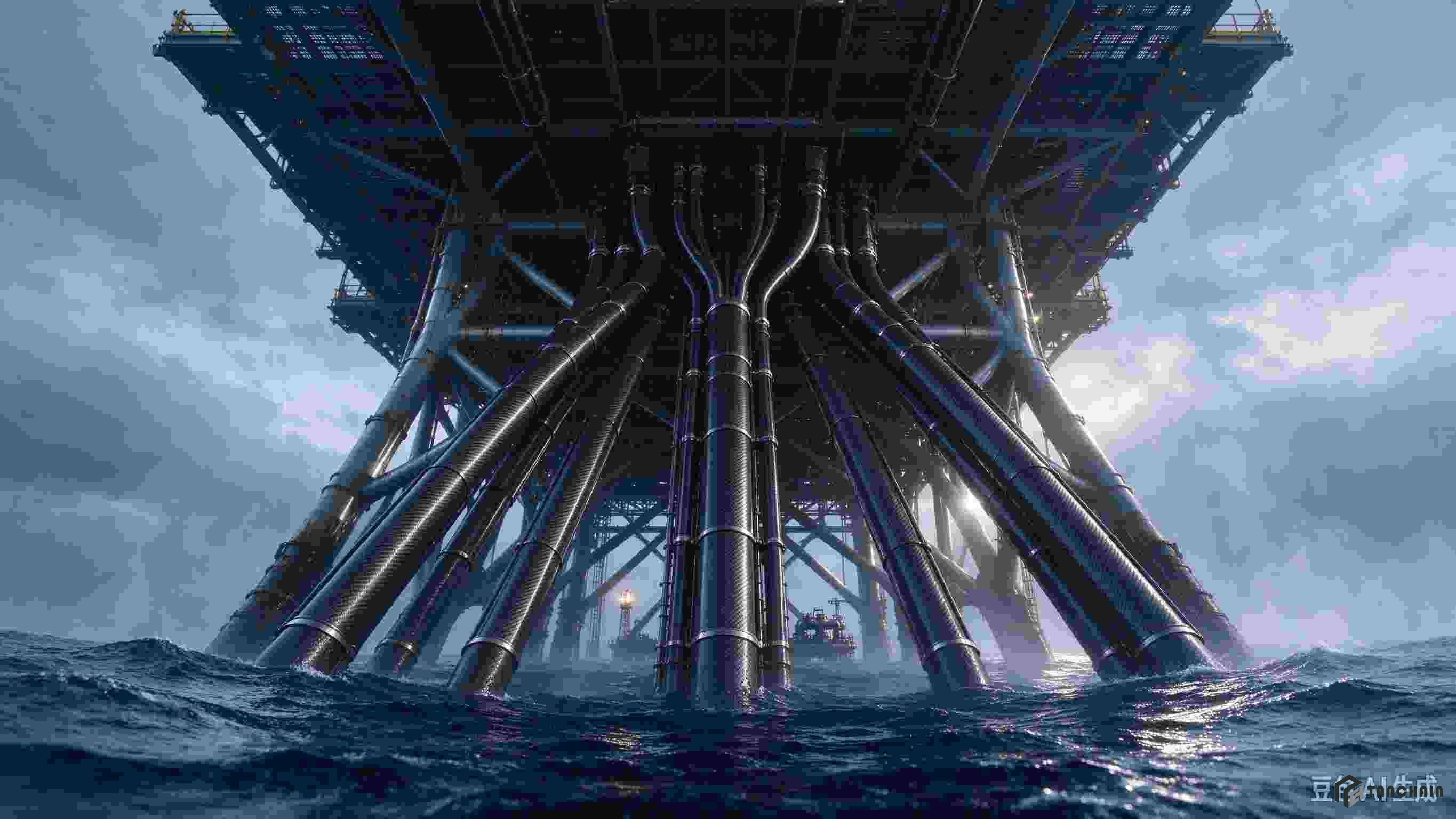
A tidal stream turbine is a machine that is asked to deliver twenty years of service in a place where almost no other industrial equipment survives: a flowing channel with a hard sand or rock bed, salt water under pressure at every seal, a tidal cycle that reverses the flow several times a day, and a maintenance window that opens for a few hours twice a month when the current slackens. The rotor blade of such a machine turns at low speed but carries very high lift loads, is loaded in exactly the direction of water flow, and takes an impact every time the tide turns and a piece of debris comes through. That is a load case that stainless steel handles by getting heavy and aluminium handles by corroding, and it is the load case carbon fiber was effectively designed for. This article sets out where carbon fiber composites go inside a tidal stream energy device, which product forms are used for each part, and what a buyer of carbon fiber needs to specify before a blade drawing is released to a converter.
1. Why Tidal Stream Machines Are a Composite Opportunity, Not Just Another Marine Structure
The tidal stream sector has a habit of being described as marine engineering. It is closer to a blend of wind turbine design and shipbuilding, with the maintenance economics of an offshore platform. Three features separate it from both.
1.1 The Load Path Is Dense and Directional
A 1.5 MW tidal rotor of roughly 15 to 20 metres in diameter develops the same order of torque as a much larger wind rotor because water is around 800 times denser than air. The blade root therefore carries enormous bending moment in a very short span. Blade shapes are stubby and thick compared with wind blades, and the spar is asked to do almost all of the work. Carbon fiber unidirectional tape, with fibre modulus of 230 to 300 GPa and near-zero coefficient of thermal expansion, is the natural spar material: it delivers stiffness where the bend is, with far less material thickness than glass, which matters because added thickness at the root also adds mass that the hub and pitch bearing must carry.
1.2 The Marine Environment Attacks Metal, Not Just the Surface
Pitting corrosion, crevice corrosion under bolted flanges, and galvanic attack where stainless fittings meet aluminium housings are routine failure sources on immersed hardware. A well-consolidated epoxy or vinyl ester laminate has no corrosion mechanism of its own; it fails instead at penetrations, at cut edges, at the interface with insert metalwork, and through water uptake over long immersion. Those are design and process items, not material selection items, and this is the distinction that determines whether a composite tidal device lasts its planned service life.
1.3 Fatigue Is the Real Design Driver
Tidal flow reverses four times a day, every day, for two decades. A rotor therefore sees roughly 30,000 significant load reversals from the tide alone before blade-rotation cycles are even counted. Carbon fiber laminates in a properly sequenced stacking pattern show excellent fatigue performance under tension-tension and tension-compression cycling, but they are sensitive to fibre waviness, voids and resin-rich pockets, all of which concentrate stress at the spar-to-skin transition. Material quality here is not a matter of preference; it converts directly into fatigue life.
2. The Component Map: Where Carbon Fiber Goes Inside a Tidal Device
A tidal stream machine breaks down into a small number of large composite parts and a larger number of small supporting ones. The list below follows the structure from rotor to foundation.
2.1 Rotor Blades and the Structural Spar
This is the largest carbon fiber content in the whole device. A typical construction is a pultruded or laid-up carbon fiber spar cap carrying bending, a glass or hybrid skin carrying shear and providing damage tolerance, and carbon fiber reinforcement around the root insert region where bearing loads are highest. Prepreg with oriented unidirectional plies is the normal choice for blades above roughly eight metres, while vacuum-infused dry fabric and stitched non-crimp fabric is used at smaller sizes or on cost-sensitive first articles.
2.2 Nacelle Covers and Hub Fairings
Nacelle covers are usually secondary structure and do not need carbon fiber for strength. They use it for different reasons: reducing top-side weight during installation, holding dimensional stability so that shaft seals and generator mounts align after transport, and resisting the long-term creep that glass-reinforced covers show under their own weight in a wet thermal cycle. A hybrid layup with a glass outer ply and carbon reinforcement at the mounting and joint areas is a common compromise.
2.3 Support Structure: Gravity Bases and Monopiles
On gravity-base devices the steel or concrete frame is conventional, but composite elements appear where the frame meets the seabed: scour protection panels, cable guides and fender components. Where a lightweight compliant support is used, pultruded carbon fiber tube and profile sections replace welded steel because pultruded CFRP in a seawater immersion grade resin will not corrode at the tidal zone, which is the most aggressive part of the entire structure.
2.4 Ducted Shrouds and Diffusers
Some tidal turbines are enclosed in a duct that increases flow through the rotor. A duct of five to eight metres diameter must hold a precise aerodynamic profile under hydrostatic and hydrodynamic load, and its stiffness requirement is high relative to its allowable weight, especially when the duct is supported from the nacelle. Carbon fiber skins over a foam or syntactic core, or carbon-aramid hybrid skins where impact from debris is expected, are the standard answer.
2.5 Drive Train Enclosures, Instrument Housings and Cable Protection
Smaller parts accumulate quickly on a tidal device: acoustic Doppler current profiler housings, strain and pressure sensor enclosures, junction boxes, hydraulic valve blocks and cable bend restrictors. These are typically machined from carbon fiber plate or produced as short-fibre mouldings. Carbon fiber plate is also used for brackets that carry instrumentation on the blade surface, where a metal bracket would act as an antenna for galvanic corrosion and a fatigue crack initiator.
3. Matching the Product Form to the Part
The same fibre in a different form behaves completely differently on the shop floor. This section maps the material forms to the parts where each one is genuinely the right answer.
3.1 Unidirectional Prepreg for Spar Caps and Root Reinforcement
Prepreg gives the highest and most consistent fibre volume fraction, typically 58 to 62 per cent, and the lowest void content when properly cured. It is used where every percentage point of modulus matters: spar caps, root transition blocks and blade spars. The trade-off is cost and the need for an autoclave or at minimum an out-of-autoclave vacuum bag cure with tight temperature control. For tidal blades built in small series, prepreg remains the reliable default for primary structure.
3.2 Stitched Non-Crimp Fabric and Woven Fabric for Infusion
Resin infusion with dry fabric is cheaper per kilogram and suits large single-piece parts. Stitched non-crimp fabric holds unidirectional carbon fiber in a 0/90 or multiaxial arrangement without the crimp that woven fabric introduces, so it preserves more of the fibre's stiffness per unit weight. It is the right choice for skins, webs and secondary structure where thickness and drapability matter more than the last few GPa. Woven carbon fiber fabric, by contrast, is best reserved for surface plies, repairable areas and small parts, because the crimp at each crossover reduces in-plane performance.
3.3 Pultruded Carbon Fiber Profiles for Struts, Braces and Ducts
Pultrusion produces continuous constant-section carbon fiber tube, rod and custom profile at a cost that laid-up parts cannot approach. On tidal devices it suits duct support struts, sensor masts, cable trays and the longitudinal stiffeners inside a duct. Pultruded profiles are highly directional: axial strength is high, transverse and bearing strength are modest, so joints must be designed with bonded sleeves or load-spreading collars rather than bolts through the section without reinforcement.
3.4 Carbon Fiber Plate for Machined Components and Backing Structure
Plate is the material of choice for brackets, backing plates, insert pads, instrument mounts and wear parts. Because it can be machined to tolerance after cure, it allows the engineering team to design a composite part with the same workflow used for aluminium. The important specification is the void content and the flatness of the plate: a plate with internal porosity will delaminate when a bolt is torqued into it.
3.5 Aramid and Hybrid Reinforcement Where Impact Is Expected
Pure carbon fiber laminates are stiff but brittle in impact. Where a blade leading edge may meet floating debris, or where a duct intake faces a sediment-laden flow, a hybrid layup with aramid fabric on the outer surface is common practice. Aramid adds impact resistance and reduces the splintering tendency of carbon, at a small penalty in compressive strength. In some designs para-aramid is also used as a protective scuff layer on the rotor hub.
4. Performance Basis: What Composites Actually Buy the Designer
4.1 Specific Stiffness Drives Blade Mass Down
A carbon-epoxy unidirectional laminate can reach a tensile modulus of 130 to 180 GPa at a density around 1.55 g/cm3. Comparable stainless steel has a modulus of about 190 GPa at 7.9 g/cm3. The result is a specific stiffness roughly four to five times higher, and that ratio is what allows a tidal blade tip to hold its shape under hydrodynamic load without a heavy steel spar. Lower blade mass also reduces the loads the hub, shaft and bearings must be designed for, producing a cascade of weight savings through the drive train.
4.2 Dimensional Stability in a Reversing Flow
Carbon fiber has a longitudinal coefficient of thermal expansion close to zero, and can be slightly negative. For a blade that must hold its profile through water temperature variation and through the exotherm of cure, this is an advantage that glass cannot match reliably. It also keeps blade pitch mechanisms and root bolted connections in alignment over long service.
4.3 Fatigue Endurance Under Tension-Compression Cycling
Unidirectional carbon laminates typically sustain several million cycles at 60 per cent of ultimate tensile strength without failure, provided the laminate is free of defects. That is far beyond the requirement of a tidal rotor over twenty years. The catch is compression: compressive strength is limited by fibre micro-buckling in the resin matrix, which is why the resin system and cure quality control so much of the fatigue outcome.
4.4 Corrosion and Biofouling Behaviour
Composites do not corrode, but they do foul, and antifouling strategy must be considered at design stage. Copper-based coatings can be applied to composite surfaces with correct primer systems; the concern is that mechanical cleaning of a fouled blade must not damage the gelcoat or expose fibre. Sacrificial anodes are not required for the laminate itself, which removes a maintenance item from the tidal window.
5. Specification Details That Decide Whether the Part Survives
5.1 Resin System for Permanent Immersion
Not every epoxy is suitable for twenty years of immersion. Seawater uptake causes plasticisation, lowering glass transition temperature, and in extreme cases blistering. Specify an epoxy or epoxy-vinyl ester system with a demonstrated seawater immersion history, a high glass transition temperature after wet conditioning, and a documented water absorption rate. Vinyl ester offers better hydrolysis resistance at the cost of slightly lower mechanical performance; the choice usually follows the OEM's qualification data.
5.2 Fibre Sizing Compatibility
The sizing on carbon fiber tow exists to bond the fibre to the resin. A tow sized for epoxy in a vinyl ester infusion will produce a laminate with poor interlaminar shear strength that may only show up in a coupon test after conditioning. Confirm with the material supplier which sizing is on the tow and whether it has been validated for the chosen infusion or prepreg resin.
5.3 Layer Sequence at the Root
Blade root failure is almost always a transition failure. The step from the thick root laminate to the thin spar shell is a stiffness discontinuity, and it concentrates load. Typical mitigation is a gradual ply drop over several hundred millimetres, with each dropped ply stepped rather than stacked, plus a dedicated carbon fiber transition laminate or aramid interlayer to arrest delamination. The specification should name a maximum ply drop ratio and require ultrasonic inspection of the transition zone.
5.4 Metallic Inserts and Galvanic Isolation
Any stainless bolt or insert bonded into a carbon laminate creates a galvanic couple, with carbon acting as the cathode and accelerating corrosion of the metal. The accepted practice is a glass fibre isolation ply at least 0.5 mm thick between carbon and metal, a bond line sealed against water ingress, and where possible dielectric fasteners. Bolted joints should also account for the low bearing strength of carbon laminates relative to steel, which means larger diameters and more washers, or a bonded sleeve joint.
6. Quality Checks to Write Into the Purchase Order
Because the buyer of carbon fiber usually buys from a converter or a material distributor, the quality requirements have to be expressed as incoming inspection and process checks rather than as final product tests.
6.1 Incoming Material Records
Each delivery of prepreg or dry fabric should come with lot-level data on areal weight, fibre volume fraction where applicable, resin content, volatile content and out-time remaining. For pultruded profile, request the fibre volume fraction, the void content and a short-beam shear value from the production lot, not from a generic datasheet.
6.2 In-Process Checks on the Laminate
For a structural blade, require ultrasonic C-scan or phased array inspection of the spar cap and the root transition, a void content check on a process coupon from the same cure run, and a record of the cure cycle including vacuum integrity. These checks cost a fraction of a blade replacement and catch the defects that most affect fatigue life.
6.3 Post-Cure and Coating Verification
Verify glass transition temperature by dynamic mechanical analysis on a coupon, not by a hardness test. Before applying antifouling or anti-corrosion coatings, require an abrasion and primer adhesion test on a representative laminate surface; poorly prepared composite surfaces are a frequent cause of coating loss within the first year.
7. Where the Sector Is Heading, and What That Means for Material Specification
Tidal stream capacity is being installed in arrays rather than single demonstrators, which changes the buying logic. Array projects need repeatable parts, documented material traceability and a conversion partner able to hold tolerances across dozens of blades rather than one. Blade designs are also growing toward 20 metre class rotors, pushing spar thickness and cure quality requirements upward. At the same time, the cost pressure is severe, which is driving interest in out-of-autoclave processing, thermoplastic laminates for recyclability, and hybrid layups that place carbon only where bending actually occurs.
For a buyer, the practical translation is straightforward. Specify carbon fiber by grade and form against a named part and a named load case; require lot traceability; keep the sizing dialog open with the resin supplier; and design the metal-to-composite interface before, not after, the mould is cut.
8. Material Support From Tanchain
Tanchain supplies the carbon fiber forms that tidal stream blade and duct manufacturers buy in volume: carbon fiber tow and yarn for conversion, unidirectional and woven carbon fiber fabric, stitched non-crimp fabric, carbon fiber prepreg, pultruded carbon fiber profiles and tube, and carbon fiber plate for machined components. Aramid fabric and hybrid reinforcement are available for leading-edge and impact-exposed areas, and pre-oxidized fiber felt can be specified for thermal and fire protection in nacelle and electrical enclosures.
If you are specifying carbon fiber for a tidal stream rotor, duct or support structure, send us the part description and the load case and we will work through the material form, the resin compatibility and the quality documentation you will need. Our team can quote carbon fiber fabric, prepreg, pultruded profiles and plate against your drawings and delivery schedule.