


-
Carbon Fiber Solutions for Telecommunications Towers and Antenna Infrastructure
-
How carbon fiber composites enable lighter antenna radomes, support poles, microwave reflectors and 5G small cell housings with high stiffness, corrosion resistance and long service life.
Introduction: Why Carbon Fiber Is Reshaping Telecommunications Infrastructure
Telecommunications networks are expanding faster than ever. From dense urban 5G deployments to remote rural coverage and offshore communication links, operators face a constant pressure to install more antennas, faster and at lower cost. Carbon fiber composite materials have become a critical enabler of this transformation. With an outstanding strength-to-weight ratio, excellent stiffness, corrosion resistance, and dimensional stability, carbon fiber allows engineers to build lighter antenna structures, stronger support poles, and more durable enclosures that withstand decades of outdoor exposure. This article explains how carbon fiber tow, carbon fiber fabric, carbon fiber prepreg, and finished composite profiles are used across modern telecommunications infrastructure.
The Engineering Challenges Facing Modern Telecom Networks
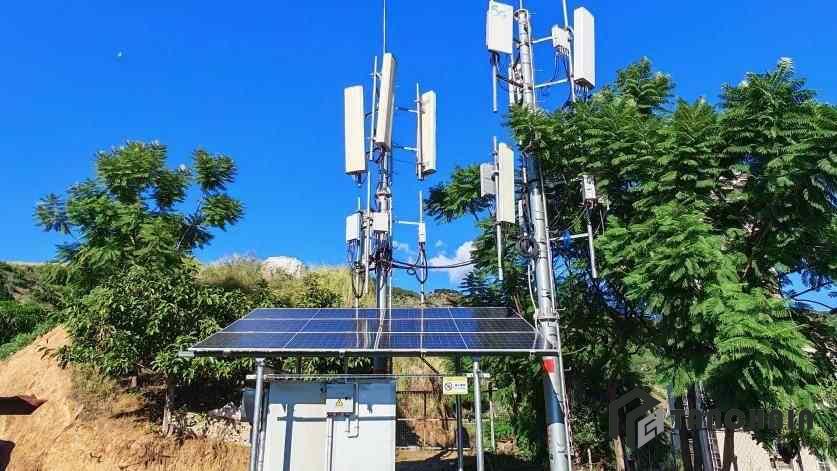
Every telecom site must support heavy antenna arrays, remote radio units, microwave dishes, and cabling while resisting wind, vibration, temperature swings, and moisture. Traditional steel and aluminum structures are strong, but they are also heavy, prone to corrosion, and increasingly expensive to transport and install. In crowded urban environments, rooftop loads, wind loading limits, and structural permits place strict constraints on how much weight a site can carry. In remote or offshore locations, logistics and maintenance costs dominate the total cost of ownership.
These constraints create a clear demand for materials that are stiff, strong, light, and weather resistant. Carbon fiber reinforced polymer (CFRP) addresses each of these requirements simultaneously, which is why telecom equipment makers increasingly specify carbon fiber components in their newest product platforms.
Carbon Fiber Antenna Radomes and Enclosures
Radio equipment must be protected from rain, dust, ultraviolet radiation, and impact without interfering with signal transmission. Carbon fiber radomes and composite enclosures offer a lightweight, rugged housing solution that shields sensitive electronics while maintaining consistent radio frequency performance. Because carbon fiber laminates can be engineered with controlled electrical properties, designers can tune the material to meet the demanding requirements of modern antenna systems.
Lightweight radomes reduce the mechanical load on mounting brackets and tower structures, allowing operators to install more equipment on existing sites without costly structural reinforcement. The corrosion resistance of carbon fiber composites is also a decisive advantage in coastal and offshore installations, where salt-laden air rapidly degrades unprotected metal housings.
Lighter Antenna Support Poles and Masts
Antenna support poles and masts are among the most structurally demanding elements of a cell site. Carbon fiber tubes made from high-modulus carbon fiber tow provide exceptional bending stiffness at a fraction of the weight of steel. This allows taller, slimmer poles that deflect less under wind load, keeping antenna pointing angles stable and maintaining signal quality.
For rooftop sites, lightweight carbon fiber poles simplify installation and reduce the demand on existing building structures. For temporary or rapidly deployable sites used in emergency response and event coverage, carbon fiber masts can be carried and erected by a small crew without heavy lifting equipment, dramatically shortening deployment time. Pultruded carbon fiber profiles offer consistent cross-sectional properties and are well suited to high-volume production of standardized pole sections and brackets.
Carbon Fiber for Microwave and Satellite Antenna Reflectors
Microwave backhaul and satellite communication depend on antenna reflectors that hold their shape precisely. Even a small distortion in a reflector surface degrades gain and increases signal loss. Carbon fiber prepreg laminated into thin, stiff skins delivers the dimensional stability required for high-frequency reflectors, and its low coefficient of thermal expansion helps maintain dish geometry across wide temperature ranges.
Compared with metal reflectors, carbon fiber composite reflectors are substantially lighter, which reduces the size and cost of the pointing mechanism and the supporting structure. This weight saving is especially valuable for satellite terminals mounted on ships, vehicles, and remote platforms where every kilogram matters.
5G Small Cells and Dense Urban Deployment
The rollout of 5G requires a far denser network of small cells mounted on poles, street furniture, and building facades. Carbon fiber composite housings and mounting brackets let network operators place compact radio units in locations where conventional metal hardware would be too heavy or visually intrusive. Smooth, paintable carbon fiber surfaces can also be finished to blend into urban streetscapes, supporting faster municipal approval.
Because small cell sites are numerous, the cost of each installation matters enormously. Lightweight carbon fiber components reduce crane time, labor requirements, and structural reinforcement costs across thousands of sites, producing substantial savings at network scale.
Durability in Harsh and Remote Environments
Telecom infrastructure is expected to operate reliably for fifteen to twenty-five years with minimal maintenance. Carbon fiber composites resist corrosion, do not rust, and maintain their mechanical properties under prolonged exposure to moisture, salt, and ultraviolet radiation when properly coated. This durability is critical for sites in deserts, mountains, coastal regions, and offshore platforms where service visits are expensive and difficult.
In addition, carbon fiber structures exhibit excellent fatigue resistance. Antenna masts and towers experience continuous vibration from wind and mechanical loading, and carbon fiber laminates maintain their stiffness and strength far longer than many metallic alternatives under these cyclic conditions.
Supporting Materials: Fabric, Tow, and Preoxidized Fiber
A complete telecom composite solution draws on several material forms. Carbon fiber fabric in woven and non-crimp constructions reinforces brackets, housings, and structural joints where multi-directional loads occur. Carbon fiber tow feeds pultrusion and filament winding processes that produce poles, tubes, and profiles with highly aligned, load-optimized fiber architecture. Carbon fiber prepreg provides consistent resin content and mechanical properties for precision components such as reflectors and radomes.
For applications requiring thermal insulation and fire resistance, complementary advanced fibers also play a role. Pre-oxidized fiber and aramid materials can be used in cable management components, protective barriers, and thermal shielding within telecom cabinets and equipment shelters, helping equipment meet fire safety standards while remaining lightweight.
Cost, Logistics, and Total Cost of Ownership
The business case for carbon fiber in telecommunications extends well beyond material properties. Lower weight reduces transport costs, enables simpler installation equipment, and lets operators add capacity to existing sites without structural upgrades. Faster installation shortens project schedules and reduces the labor content of each site, which is decisive when deploying thousands of cells in a competitive rollout program.
Over the full service life, corrosion resistance and fatigue durability translate into fewer maintenance interventions and lower replacement costs. When these factors are combined, carbon fiber composite components frequently deliver a lower total cost of ownership than conventional metal hardware, even where the initial material cost is higher.
Why Choose an Experienced Carbon Fiber Supplier
Telecom equipment manufacturers need more than good material data; they need consistent quality, dependable lead times, and technical support that can help translate design intent into manufacturable composite parts. Uniform carbon fiber filament properties, tight-tolerance fabrics, and reproducible prepreg behavior are essential to maintain performance from prototype through mass production.
Working with a supplier that offers the full range of carbon fiber tow, fabric, prepreg, and finished composite profiles simplifies sourcing and reduces supply chain risk. Documented mechanical properties and batch traceability give engineers the confidence to specify carbon fiber composites in safety-critical and long-life telecom applications.
Conclusion: Carbon Fiber as a Foundation for Next-Generation Networks
As telecommunications networks grow denser, more distributed, and more demanding, carbon fiber composite materials provide the lightweight strength, stiffness, and durability that modern infrastructure requires. From antenna radomes and support masts to microwave reflectors and 5G small cell housings, carbon fiber enables telecom operators to build faster, deploy more efficiently, and reduce long-term maintenance costs across the entire network.
Whether you are developing a new antenna platform, expanding 5G coverage, or engineering equipment for remote and offshore communication links, selecting the right carbon fiber partner makes a measurable difference in performance and cost. We invite you to explore our complete range of carbon fiber materials and composite products—including carbon fiber tow, fabric, prepreg, tubes, and plates—to find the solution that fits your telecommunications application. Contact our team for technical guidance, material samples, or a tailored quotation for your next project.