


-
How Carbon Fiber Is Shaping the Future of High-Performance Sports Equipment
-
An in-depth look at how carbon fiber composites deliver lighter, stiffer and more durable gear across cycling, racket sports, golf, water sports and protective equipment, and what manufacturers should consider when sourcing materials.
Why Carbon Fiber Became the Material of Choice in Modern Sports Equipment
Every athlete is chasing the same thing: more speed, more control, and less fatigue. Carbon fiber does not make anyone stronger, but it changes the equipment they use, and that often decides the outcome. A bicycle that climbs easier, a racket that swings faster, a golf shaft that returns energy more predictably, a set of running blades that behaves like a spring. These are not marketing claims. They are engineering results that come from one material property combination that nothing else matches well: very high stiffness and strength at very low weight.
This article looks at how carbon fiber is used across the sports equipment industry, which product forms matter most, and what brands and manufacturers should consider when sourcing material for high-performance sporting goods.
The Engineering Logic Behind Lighter Sporting Goods
Sport equipment design usually reduces to a single problem: moving mass. When you lower the weight of a racket, a club, a bike frame, or a shoe plate, three things change at once. The athlete accelerates it faster, controls it with less effort, and can sustain that effort for longer. Everything else the equipment must do, such as absorb shock, store energy, or resist impact, has to be preserved at the same time.
Stiffness, Strength, and the Weight Problem
Carbon fiber reinforced polymer, or CFRP, offers specific strength and specific stiffness that steel, aluminium, and even titanium cannot approach. A well-designed carbon fiber laminate can be several times lighter than an aluminium structure of comparable stiffness, and several times stiffer than a glass fiber part of the same mass. For sporting goods, that margin goes directly into performance.
The second advantage is anisotropy. Metals behave the same in every direction. Carbon fiber laminates can be built so that strength and stiffness sit exactly where the load travels, and stay light everywhere else. A golf shaft can be torsionally stiff to reduce twist while remaining flexible in the bending direction. A bike frame can be stiff at the bottom bracket for power transfer and compliant in the seat stays for rider comfort. That level of control simply is not available in metal.
Where Carbon Fiber Appears Across Sport Categories
Nearly every sport that rewards low weight and precise energy return now uses carbon fiber composites somewhere in its equipment. The list keeps growing as manufacturing costs fall and design tools improve.
Cycling: Frames, Wheels, and Cockpit Components
Cycling was one of the first mass markets to adopt carbon fiber seriously, and today it remains the largest. Frames are laid up ply by ply, with fiber orientation tuned for the loads of pedaling, cornering, and sprinting. Wheels use carbon fiber rims to cut rotational inertia, so acceleration and climbing both improve.
Handlebars, seat posts, cranks, and even chainrings are now commonly carbon. Aero optimization is another driver, since composite structures can be molded into smooth airfoil shapes without the constraints of welding and tube forming. Oxidized fiber and aramid materials also appear in brake pad backing and heat shielding, where flame resistance and thermal insulation matter.
Why Rotational Weight Matters More Than Frame Weight
A gram saved in a wheel rim is worth far more than a gram saved in a frame, because rotational mass must be accelerated twice: once linearly and once in rotation. This is why carbon fiber wheel rims deliver a performance gain that riders notice immediately, and why manufacturers invest heavily in optimizing layup schedules for rims and spokes.
Rackets, Bats, and Sticks: Precision in Every Swing
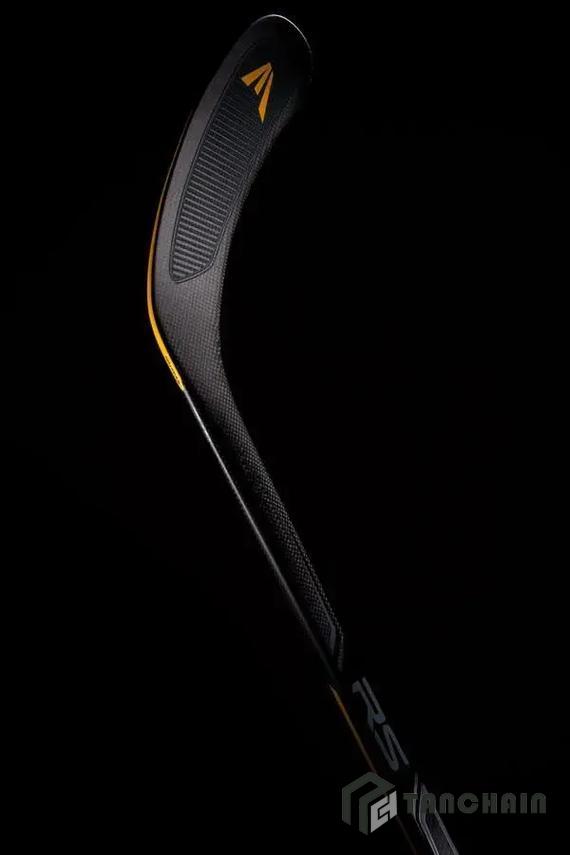
Tennis rackets, badminton rackets, hockey sticks, and lacrosse shafts all benefit from the same logic. Carbon fiber provides stiffness for power transfer, damping for comfort, and light weight for swing speed. Modern rackets blend carbon fiber with glass fiber, aramid, and sometimes graphene-enhanced resins to tune the feel.
The layup schedule determines the character of the racket more than the raw fiber content does. A stiffer hoop gives more control on volleys, while a more flexible shaft gives easier depth on groundstrokes. Brands design entire product families around these variations, and price tiers often track fiber grade and layup complexity rather than the shape alone.
Golf: Shafts, Heads, and the Search for Consistency
Golf equipment has become an engineering discipline. Carbon fiber shafts reduce overall club weight, allowing heavier clubheads for more forgiveness, and their damping behavior smooths the feel at impact. Carbon fiber crowns and composite head sections have allowed designers to move mass lower and further back, raising launch and reducing spin.
Where composite shafts excel is consistency. A well-made carbon fiber shaft returns energy predictably across thousands of swings, which matters more to a serious player than any single-shot gain. This consistency depends heavily on fiber alignment and resin content control during production.
Water Sports: Paddles, Boards, and Boat Hulls
Kayak paddles, canoe paddles, and stand-up paddle boards rely on carbon fiber for light swing weight and efficient power transfer through the water. Racing shells use carbon fiber hulls and riggers to reduce displacement and increase speed per stroke. Surfboards and kiteboards use carbon fiber reinforcement in high-stress areas such as the tail and rail.
Salt water is unforgiving, and carbon fiber composites resist corrosion in ways that aluminium and steel cannot. That durability extends product life in a market where equipment is exposed to salt, sand, and UV radiation for years.
Hybrid Laminates and Impact Tolerance
Pure carbon laminates are stiff but can be brittle under sharp impact. Designers address this by blending aramid fiber into the layup, especially in areas that take hits from rocks, paddles, or other boards. Aramid adds toughness and impact resistance while carbon keeps the structure light and rigid, which is why hybrid carbon and aramid laminates are so common in boards and paddles.
Winter Sports, Protective Gear, and Athletic Footwear
Ski and snowboard cores, helmets, protective back plates, shin guards, and cycling shoes all use carbon fiber where stiffness and low weight matter. Carbon fiber shoe plates improve pedaling efficiency in cycling and energy return in running footwear. In protective equipment, carbon fiber and aramid shells absorb impact while staying light enough that athletes will actually wear them.
Pre-oxidized fiber materials, including oxidized fiber fabric, oxidized fiber yarn, and oxidized fiber felt, contribute flame resistance and thermal insulation. They are useful in equipment where heat exposure is a factor, such as motorsport suits, brake area shielding, and thermal barriers in protective gear.
Material Forms and Manufacturing Methods That Matter
Sporting goods manufacturers rarely work with raw fiber directly. They choose from a family of intermediate products, and the choice usually follows the production process and the required consistency.
Fabric, Prepreg, and Tow
Carbon fiber fabric serves hand layup and vacuum infusion, common in low to medium volume production and in prototype development. Carbon fiber prepreg, where fiber is pre-impregnated with a precisely controlled resin content, delivers repeatable mechanical properties and is preferred for premium structures and autoclave or press cured parts. Carbon fiber tow feeds filament winding, pultrusion, and automated tape laying, and is the raw input for many high-volume composite processes.
Pultruded Profiles, Tubes, and Plates
Pultruded carbon fiber profiles give uniform, repeatable properties for hockey stick shafts, paddle shafts, arrow shafts, and structural inserts. Carbon fiber tube is the classic choice for bike frame stays, boom sections, and kayak paddle shafts. Carbon fiber plate provides thin, stiff sections for shoe plates, base plates, and reinforcement patches. Because these are factory-produced, their properties are documented and consistent, which simplifies quality control for brands that outsource assembly.
Short Fiber and Chopped Applications
Chopped carbon fiber and short fiber grades serve injection-molded components, tooling, and non-critical structural parts where cost matters and loads are moderate. These materials allow designers to add stiffness to plastic parts without changing the entire manufacturing approach.
The Retail Reality: Cost, Consistency, and Brand Risk
Sporting goods sit in a market where reputation is fragile. A frame that cracks in a sprint or a shaft that delaminates after a season damages a brand far more than it damages a single customer relationship. That is why material consistency is not only a production concern but a commercial one.
Fiber areal weight, resin content, and fiber alignment must stay within tight tolerances from batch to batch. When they drift, part stiffness drifts with them, and the athlete notices. Reliable suppliers provide batch documentation, mechanical test data, and traceability that lets a manufacturer stand behind its warranty claims with evidence rather than assumption.
Why Brands Build Long-Term Supplier Relationships
Composite sporting goods are developed over product cycles that often span eighteen months or more. Prototypes use one set of materials, production uses another, and the transition is where problems appear. A supplier who can hold the same specification across prototyping, pilot runs, and mass production removes a large source of risk.
This is where an integrated material offering helps. A single partner that supplies carbon fiber tow, carbon fiber fabric, carbon fiber prepreg, pultruded profiles, carbon fiber tube, carbon fiber plate, aramid fiber, and oxidized fiber products can support an entire product line without multiple qualification programs. Fewer suppliers means fewer variables, and fewer variables means shorter development cycles.
Quality Documentation That Supports Certification
Competitive sport is governed by equipment rules. Cycling, rowing, and motorsport all have technical regulations that constrain geometry, mass, and sometimes material behaviour. Manufacturers need documented properties and consistent material lots to demonstrate compliance, and they need to do it quickly when regulations change.
What to Look For in a Carbon Fiber Supplier for Sporting Goods
The right partner for sports equipment manufacturing usually shows a few clear signs. They understand the performance demands of the specific sport rather than only the general composite industry. They can supply multiple material forms so a brand can balance stiffness, toughness, and cost across a product range. They control fiber alignment and resin content tightly enough that a layup schedule designed in development still behaves the same way in production. And they can scale volumes without changing specifications.
It also helps when the supplier carries complementary materials. Carbon fiber alone is rarely the whole answer. Aramid fiber adds impact resistance, oxidized fiber adds flame resistance and insulation, and carbon fiber fabric or prepreg ties them together in a workable laminate. Access to the full material family shortens the path from concept to shelf-ready product.
Conclusion: Performance Equipment Starts With the Right Material
Carbon fiber has moved from a niche material for elite racing programs to the standard choice across cycling, racket sports, golf, water sports, winter sports, and athletic footwear. The reason is straightforward. It delivers stiffness, strength, and durability at a weight that no metal can match, and it can be engineered to place those properties exactly where the athlete needs them.
For brands building the next generation of sports equipment, the material decision is a competitive decision. Choosing a carbon fiber partner with consistent quality, a broad product range covering carbon fiber fabric, carbon fiber prepreg, pultruded profiles, carbon fiber tube, carbon fiber plate, aramid, and oxidized fiber materials is what turns a good design into a product athletes trust.
Explore our full range of carbon fiber and composite materials for sporting goods applications, or contact our technical team to discuss material selection, samples, and quotation for your next product program.