


-
How Carbon Fiber Is Driving Robotics and Industrial Automation Performance
-
Discover how carbon fiber in robotics reduces arm weight, cuts energy use, and boosts automation precision across industrial manufacturing.
Why Carbon Fiber Is Becoming Essential in Robotics and Industrial Automation
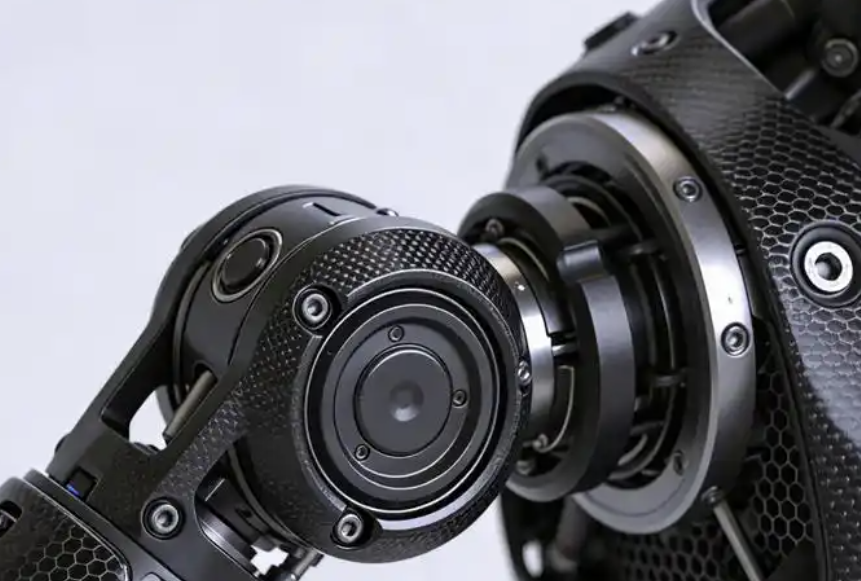
Factories around the world are pushing robots to move faster, carry heavier payloads, and cycle for more hours without failure. As automation spreads beyond automotive assembly lines into electronics, logistics, and precision manufacturing, engineers face a stubborn problem: every extra gram of robot arm weight eats into speed, energy efficiency, and positioning accuracy. Carbon fiber in robotics and industrial automation has emerged as one of the most effective answers, replacing steel and aluminum in robotic arms, end effectors, gantries, and structural frames. Because carbon fiber composite materials deliver roughly five times the specific strength of steel at a fraction of the weight, machine builders can design automation systems that are lighter, stiffer, and more responsive than ever before.
Balancing Strength, Lightweight Design, and Stiffness for Robot Arms
A robotic arm performs thousands of precision motions every day, and repeated acceleration exposes the structure to fatigue that metal components handle only by adding thickness and weight. Carbon fiber reinforced polymer (CFRP) changes this trade-off entirely. Low-inertia carbon fiber robot arms reduce the mass that each servo motor must move, which allows smaller drives to achieve the same output while consuming less power and generating less heat. The high axial stiffness of carbon fiber laminates also minimizes deflection under load, so tooling stays precise even when a long reach arm handles a heavy workpiece. For manufacturers seeking dependable carbon fiber robot arm tubing and profiles, suppliers that control the full chain from carbon fiber tow through pultrusion and prepreg lamination are better positioned to guarantee consistent mechanical properties across every batch.
Lighter End Effectors and Grippers That Improve Cycle Time
The end effector is the part of an automated cell that physically contacts the product, and it is where weight reduction delivers the quickest return on investment. An end effector fabricated from carbon fiber plates and carbon fiber tubes can be as much as sixty percent lighter than a comparable aluminum design while remaining stiff enough to grip and orient components precisely. Lower mass at the end of the arm means the robot can accelerate, decelerate, and change direction faster without inducing vibration. In high-volume pick-and-place lines, shaving even a few milliseconds from each cycle compounds into dramatically higher daily output. Because our carbon fiber sheets, tubes, and short fiber reinforced molds can be machined and bonded to exact dimensional tolerances, integrators can build custom gripper jaws and vacuum end effectors without waiting on heavy metal castings.
Carbon Fiber Gantries and Frames in Automated Machine Tools
Machine tools and CNC gantry systems rely on rigid guidance structures that hold a cutting spindle or sensing head on a precise path. Steel and cast-iron gantries provide the required stiffness, but their mass imposes limits on feed acceleration and increases floor loading. Carbon fiber composite gantries bridge this gap by combining high modulus with low density, enabling faster axis acceleration and reduced inertia during rapid traverse. Pultruded carbon fiber profiles and laminated box beams are increasingly used in linear motion platforms, inspection machines, and coordinate measuring equipment where thermal stability and dimensional precision matter. The same principle applies to lightweight tool chucks and spindles, where reduced rotating mass lowers thermal growth and improves surface finish on machined parts.
Why Low Inertia Matters for Energy Efficiency and Precision
Every time a robot reverses direction, it must first stop the moving mass and then accelerate it again. A heavy articulated arm demands larger motors, stronger reducers, and more powerful cooling, all of which raise both capital cost and operating expense. Carbon fiber structural parts lower the moving inertia so dramatically that machine builders frequently downsize actuators and power electronics, shrinking the entire control cabinet footprint. Beyond energy savings, lighter structures reduce resonance and vibration that degrade path accuracy at high speed. For laboratory automation, semiconductor handling, and medical device assembly, where micrometer-level repeatability is non-negotiable, the vibration damping characteristics of carbon fiber make it the preferred option over metals.
Carbon Fiber Reinforcement in Collaborative Robots Designed for Humans
Collaborative robots, or cobots, are built to share workspace with human operators, which places strict limits on speed, impact force, and overall mass. Cobot arms are designed with low payload-to-weight ratios so that an accidental collision cannot injure a nearby worker. Carbon fiber makes these safety-critical designs more practical by allowing engineers to build strong, human-friendly arms that remain light enough to satisfy safety certification while still supporting useful payloads. Smooth, contoured carbon fiber covers can house cables and sensors cleanly, and the material's natural resistance to many industrial chemicals keeps cobot housings looking professional even in oily shop environments.
Thermal Stability and Corrosion Resistance in Demanding Production Floors
Industrial automation often operates in warm, humid, or chemically active environments where steel components eventually corrode and aluminum frames risk galvanic reactions. Carbon fiber composites do not rust, and they show excellent resistance to many solvents, mild acids, and cleaning agents used on production lines. This makes carbon fiber automation components well suited to food processing, pharmaceutical cleanrooms, and electronics fabrication, where hygiene and chemical tolerance are as important as mechanical strength. Additionally, the near-zero coefficient of thermal expansion along the fiber direction provides dimensional stability that keeps precision carriers and measurement fixtures accurate even when the plant floor temperature fluctuates through a full shift.
Custom Carbon Fiber Solutions for Every Stage of the Automation Build
Real-world automation projects demand flexibility, and one supplier is rarely able to serve every requirement from a single material. As a full-spectrum advanced fiber manufacturer, we supply carbon fiber tow, carbon fiber fabric, carbon fiber unidirectional sheets, prepreg systems, and engineered carbon fiber tubes and plates that integrators can machine into finished robot parts. Engineers also turn to aramid and oxidized fiber variants when specific jobs require cut resistance, abrasion protection, or fire-resistant sleeving along cable routes and cable carriers. By standardizing on pultruded profiles and high-modulus fabrics, automation designers reduce lead times and avoid the quality inconsistency that comes from sourcing each component from unrelated vendors.
Real-World Applications Across the Automation Economy
The benefits of carbon fiber in robotics are visible across many industries. In electronics assembly, lightweight carbon fiber arms position delicate circuit boards thousands of times per hour with minimal vibration. In logistics and warehousing, robotic depalletizers built with carbon fiber frames move parcels faster while using smaller motors. In metal forming and CNC machining, low-inertia carbon fiber tool carriers improve surface quality and tool life. Even in inspection and metrology, carbon fiber supporting structures keep optical sensors and laser trackers stable enough to measure features within tight tolerances. As manufacturers continue to seek every performance advantage, demand for high-quality carbon fiber robot components is expected to keep rising across the automation economy.
Choosing a Reliable Carbon Fiber Partner for Your Automation Project
Selecting the right materials partner is as important as the design itself. Look for a manufacturer that controls fiber quality from the earliest stage, because the mechanical performance of a carbon fiber robotic arm depends absolutely on the consistency of the underlying tow, the resin system, and the lamination process. A trusted advanced fiber supplier should provide clear technical data sheets, support custom dimensions and resin formulations, and respond quickly with samples for destructive testing. By partnering with a producer that offers carbon fiber filament, fabric, prepreg, and finished profiles in one place, you keep your supply chain simple and your quality standards uniform. Automated machine builders who specify the right carbon fiber today position their equipment to stay competitive for years of round-the-clock production. Contact our engineering team to discuss the carbon fiber components best suited to your robotic arm design, or browse our carbon fiber product range to request a sample and quotation.