


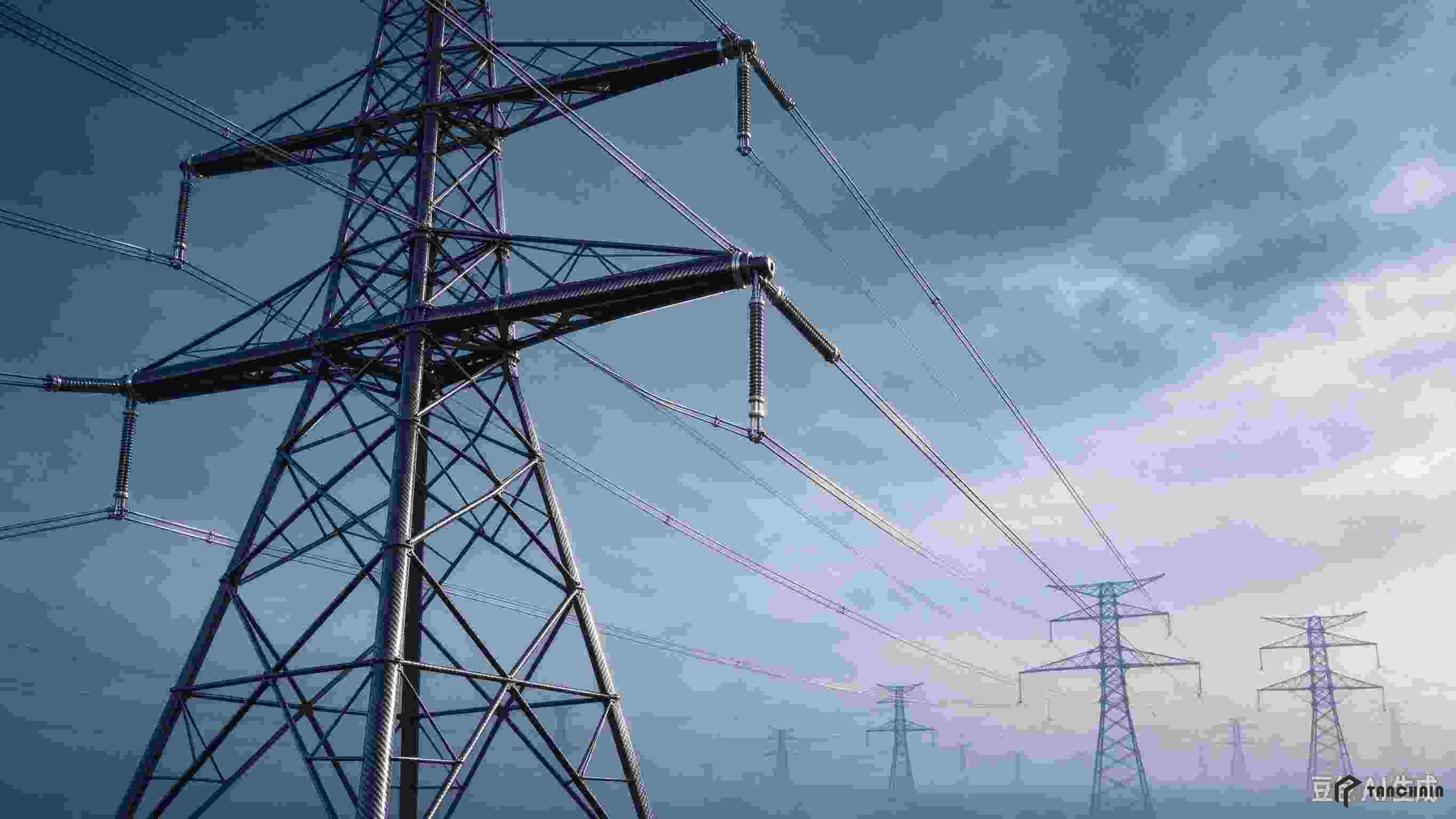
-
Carbon Fiber Composites in Power Transmission and Distribution Lines
-
How carbon fiber composite cores, pultruded cross-arms, tubes and insulating hardware help utilities raise line capacity, cut tower load and extend service life - plus specification points for long-life composite grid components.
Every kilometre of overhead transmission line is a compromise between three things that pull in different directions: how much current the conductor can carry, how far apart the towers can stand, and how much the structures and foundations are allowed to cost. Carbon fiber has become the material that loosens that compromise. In composite core conductors, pultruded cross-arms, and light structural members inside substations, carbon fiber reinforced polymer (CFRP) lets utilities carry more power on existing rights of way, rebuild ageing lines without new towers, and place equipment where steel and wood simply cannot go.
This article is a practical reference for transmission and distribution engineers, EPC contractors, and procurement teams evaluating carbon fiber for power transmission lines. It explains why the material suits overhead line work, walks through the main applications from conductor cores to cross-arms and live-line tools, and closes with the specification points that decide whether a composite part survives twenty-five years of sun, wind, ice, and tracking current.
1. Why Overhead Lines Are a Natural Home for Carbon Fiber Composites
Overhead line design is dominated by a single ratio: strength and stiffness divided by weight. Every kilogram hung between two towers adds tension, sag, and load on the tower head. A material that carries the same load at a fraction of the mass changes the economics of the whole line, not just one component.
CFRP delivers three properties that matter directly on a transmission corridor:
High specific strength and stiffness. Pultruded carbon fiber rod reaches tensile strengths well above high-strength steel at roughly one fifth of the density, so a load-bearing member can be slimmed down without losing capacity.
Low and tailorable thermal expansion. Carbon fiber along the fiber direction expands only slightly when heated, and a properly designed laminate can be tuned close to zero. That keeps sag predictable as conductor temperature rises under load.
Corrosion and fatigue resistance. There is no rust, no galvanic thinning of the load path, and no loss of section from industrial or coastal atmosphere. Under aeolian vibration and galloping, composites do not develop the fatigue cracks that shorten the life of metal hardware.
There is a fourth property that matters for a different reason: CFRP is not a conductor in the usual sense. A pultruded carbon rod has low axial electrical conductivity, which is why composite core conductors must be designed with care around lightning, fault current, and the interface between core and aluminium. That design constraint is well understood today, but it belongs in every specification discussion.
2. Composite Core Conductors: More Capacity Without New Towers
The most visible application of carbon fiber on a transmission line is the composite core conductor, often described as ACCC (aluminium conductor composite core) or by similar trade names. The construction replaces the steel core of a conventional ACSR conductor with a pultruded carbon fiber and glass fiber rod, around which aluminium strands are layered.
The engineering consequences are significant. Because the composite core is lighter than an equivalent steel core, more of the conductor's mass can be aluminium, which is the part that actually carries current. Because the core has low thermal expansion, the conductor can run at higher temperatures before sag becomes unacceptable. Together these effects allow a reconductoring project to raise ampacity on an existing tower line, usually without raising towers or buying new right of way.
For a utility facing load growth in a built-up area, that is often the difference between a two-year permitting battle and a construction season. The same property helps in another common case: replacing an ageing conductor on a line that was designed decades ago with generous clearances that no longer match modern demand.
Composite core conductors also reduce ice and wind loading. Lighter conductors mean less static tension on towers and foundations, and the low sag behaviour gives engineers more headroom when specifying clearance to ground, buildings, and crossing lines.
3. Composite Cross-Arms and Tower Members
Tower heads are where weight and electrical clearance meet. A steel cross-arm is heavy, needs a large crane or helicopter to install, and must be kept a safe distance from live conductors. Pultruded carbon fiber and glass fiber cross-arms solve all three problems at once.
A composite cross-arm weighs a fraction of its steel equivalent, so it can often be installed by a small crew with a bucket truck. Its smooth, weather-resistant surface sheds pollution and reduces the leakage current path, and its dielectric strength allows conductors to be brought closer to the structure. That electrical property is what enables compact line design: narrower rights of way, lower visual impact, and in some cases the ability to upgrade a line inside its existing corridor.
Composite members also appear in tower bracing, guy insulators, and platform structures, particularly on lattice towers in coastal or heavily polluted regions where galvanised steel corrodes quickly. A composite brace does not need repainting, does not lose section to rust, and keeps its strength through repeated thermal cycling.
4. Distribution Networks, Insulation and Live-Line Work
Medium-voltage distribution is a high-volume market where composite hardware competes directly with porcelain, glass, and wood. Two product families stand out.
The first is the composite insulator and the insulating cross-arm. A fiberglass or carbon fiber reinforced core carries the mechanical load, while a silicone or EPDM housing provides creepage distance and pollution resistance. Because the core is light, these insulators are easier to handle and less prone to damage during installation than ceramic units, and they fail in a safer mode.
The second is the live-line tool. Hot sticks, auxiliary arms, and temporary bypass supports for work near energised conductors must be strong, light, and electrically insulating. Pultruded carbon fiber and glass fiber tubes give line crews tools that are stiff enough to control a conductor and light enough to hold overhead for an hour. Aramid fiber adds a complementary option for protective clothing and fall-protection hardware used by climbing crews.
5. Substation and Equipment Applications
Inside the substation fence, carbon fiber appears in less obvious places. Cable trays and support structures made from pultruded profiles resist corrosion in coastal and industrial yards, where galvanised steel needs periodic replacement. Composite grating and walkway structures reduce maintenance in high-voltage yards because they do not rust and do not require hot work to repair.
Carbon fiber also serves equipment makers. Lightweight structural frames for mobile substations and trailer-mounted switchgear benefit from the stiffness-to-weight ratio, and composite housings for instrument transformers and surge arresters reduce weight on gantries. In wind and solar hybrid projects connected to the same grid, carbon fiber pultrusions are already familiar from turbine blade structures, which keeps the supply chain consistent across a utility's renewable portfolio.
6. Pre-Oxidized and Aramid Fibers on the Grid
Carbon fiber is not the only high-performance fiber on a transmission site. Pre-oxidized (PANOX) fiber is a flame-retardant, electrically non-conductive material used in fire barriers, cable protection wraps, and thermal insulation around equipment. It does not melt or drip, which makes it suitable for cable trays in substations and for protective blankets used during hot work near energised equipment.
Aramid fiber, with its very high tensile strength and impact resistance, is used in line-worker protective clothing, cut-resistant gloves, and lanyards, and in composite reinforcement where dielectric performance matters more than stiffness. Together the three fiber families cover the mechanical, electrical, and thermal duties of a modern grid.
7. Specification Points That Decide Long-Term Performance
Composite hardware is a long-life purchase, and small differences in specification have large effects after a decade in service. The following checks are worth building into any enquiry.
Fiber volume fraction and void content. Higher, well-controlled fiber volume gives consistent strength; excessive voids open paths for moisture ingress.
Resin system and UV stability. Polyurethane, epoxy, and vinyl ester systems behave differently under ultraviolet exposure and hydrolytic ageing. Ask for the resin type and for weathering test data, not just a generic claim.
Glass fiber surface layer on carbon rods. In conductor cores and insulating members, a glass fiber outer layer isolates the carbon from aluminium and from creepage surfaces, preventing galvanic corrosion and tracking.
End fittings and interface design. Most field failures in composite line hardware originate at the metal-to-composite joint, not in the composite itself. Specify the crimp or wedge design, the proof load, and the test standard.
Temperature rating and sag data. For conductor cores, request the sag-tension curve at the intended operating temperature, not a single rated value.
Electrical test evidence. For insulating components, tracking and erosion resistance, water diffusion, and impulse withstand data should be traceable to recognised standards.
It is also worth asking how the supplier controls pultrusion quality batch to batch. A transmission utility may buy thousands of metres of rod or hundreds of cross-arms over a project, and consistency between deliveries matters as much as the properties of a single test coupon.
8. Choosing the Right Product Form
Grid projects rarely use a single fiber format. A typical package combines several:
Carbon fiber pultruded rod for conductor cores and load-bearing tension members.
Carbon fiber tubes and profiles for cross-arms, braces, and live-line tool components.
Carbon fiber fabric and prepreg for laminating repair sleeves, custom brackets, and prototype structures.
Aramid fabric and yarn for protective textiles and impact-resistant reinforcement.
Pre-oxidized fiber felt and fabric for fire barriers and thermal protection.
Matching the form to the duty keeps both cost and weight in check. A solid carbon fiber plate is rarely the right answer where a thin-walled pultruded tube carries the same bending load with less material.
9. Where the Technology Is Heading
Three trends are pushing carbon fiber deeper into grid infrastructure. The first is grid reinforcement driven by renewable connection and electrification of heating and transport, which increases load on lines that were never designed for it. Reconductoring with composite cores is one of the fastest ways to add capacity without new corridors.
The second is compact and visually sensitive line design, particularly near cities and protected landscapes, where composite cross-arms allow lower, narrower structures. The third is resilience: utilities in ice, cyclone, and wildfire zones are looking for hardware that does not corrode, does not ignite, and keeps its strength after repeated extreme events.
Each of these trends rewards the same underlying property set, which is why carbon fiber composite hardware has moved from a niche alternative to a standard option in many utility specifications.
10. Sourcing Carbon Fiber Components for Transmission and Distribution
Shanghai Tanchain New Material Technology supplies carbon fiber, aramid, and pre-oxidized fiber in the forms that grid hardware manufacturers need: continuous filament and staple fiber, fabric and prepreg, pultruded rods, tubes and profiles, and finished composite parts. For transmission and distribution customers, the relevant products include pultruded carbon fiber rods for conductor cores, pultruded tubes and profiles for cross-arms and tools, and aramid and pre-oxidized textiles for protective and fire-barrier duties.
If you are developing a composite conductor, a compact cross-arm, or a live-line tool programme, the most useful first step is a short technical discussion about the load case, the electrical environment, and the expected service life. From there the right fiber format, resin system, and laminate design usually become clear quickly.
Browse our carbon fiber product range or contact our technical team to discuss carbon fiber for power transmission lines and request a quotation for your project.