


-
Carbon Fiber in Port and Heavy-Lifting Equipment: Lighter Cargo Handling
-
How carbon fiber composites, aramid fiber and pre-oxidized fiber reduce weight, fight corrosion and cut maintenance in container spreaders, cranes, lifting beams and automated port terminals.
Why Port and Heavy-Lifting Equipment Is Moving to Carbon Fiber
Ports and heavy-lifting operations run on one simple equation: move more cargo per hour with less downtime. Every kilogram you strip from a spreader beam, a gantry trolley or a ship-to-shore crane boom translates directly into faster cycle times, lower energy bills and less wear on rails, ropes and motors. That is why carbon fiber composite materials have become a serious engineering option for port equipment, heavy lifting gear and marine handling systems.
Unlike steel, carbon fiber reinforced polymer (CFRP) delivers very high stiffness and strength at roughly one quarter of the density. For lifting equipment, that ratio is the whole story. A lighter spreader can lift the same container with a smaller crane, or the same crane can lift a heavier container within its rated load. This article explains where carbon fiber, aramid fiber and pre-oxidized fiber fit in modern ports and heavy-lifting equipment, and what problems they solve in day-to-day operation.
Container Spreaders and Lifting Beams
The spreader is the most weight-sensitive part of any container crane. It hangs at the end of the rope, so every kilogram saved there improves the crane payload, reduces rope tension and cuts the energy needed to accelerate and brake the load.
Carbon fiber composite tubes and beams allow manufacturers to build spreader frames that are dramatically lighter than welded steel while keeping the stiffness needed for reliable twist-lock engagement. High-modulus carbon fiber long filament gives the frame its rigidity, while aramid fiber and pre-oxidized fiber can be added to improve impact tolerance and flame resistance in hot, humid marine air.
A practical example: a steel spreader frame that weighs several tonnes can, in the right design, be rebuilt with a CFRP load path that removes a meaningful share of that mass. The crane then either lifts heavier containers within the same rating or operates with lower motor current, less rope wear and shorter cycle times.
Ship-to-Shore and Gantry Crane Structures
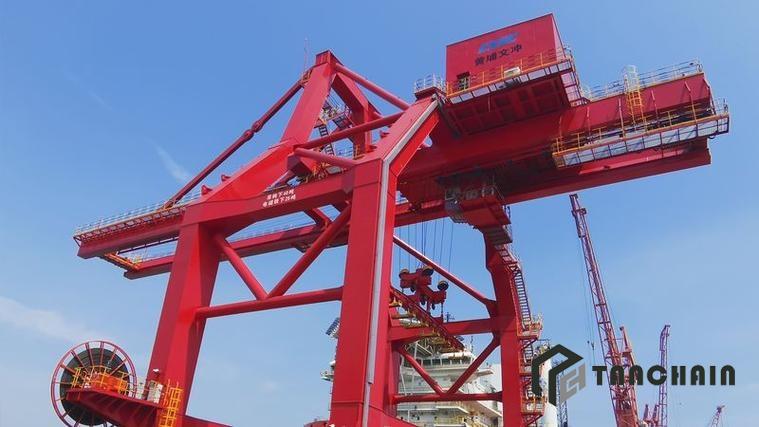
Ship-to-shore (STS) cranes and rail-mounted gantry (RMG) cranes are massive steel structures, and lightweighting them is not simple. The opportunity lies in secondary structures and moving components rather than the main legs.
Carbon fiber composite profiles are well suited to trolley frames, maintenance platforms, cable-management arms and boom tip sections where mass reduction directly lowers the moving load. Lower moving mass means faster trolley travel, less structural fatigue and longer service life for bearings and wheels.
Because carbon fiber prepreg and pultruded carbon fiber profiles resist corrosion, they also hold up far better than painted steel in the salt-laden port environment. Less corrosion means less repainting, fewer inspection findings and more productive operating hours.
Marine and Port Handling in Corrosive Air
Ports combine salt spray, humidity, UV exposure and temperature swings. Steel needs constant protection; carbon fiber composites do not rust. This is a decisive advantage for equipment that spends its life outdoors, close to the water.
Carbon fiber fabric and carbon fiber plate are widely used in marine handling equipment such as davits, gangways, mooring hardware enclosures and bollard covers. Aramid fiber adds impact resistance for fenders and protective panels, while pre-oxidized fiber fabric and pre-oxidized fiber felt provide excellent thermal insulation and flame resistance for hot works and safety barriers around fuel and electrical zones.
The result is equipment that keeps its shape and strength in the harshest marine conditions, with far lower maintenance cost over its life.
Heavy Lifting, Rigging and Below-the-Hook Tools
Below-the-hook lifting devices, slings, lifting beams, coil lifters and vacuum lifters are another strong fit for carbon fiber. Operators handle these tools by hand or with small auxiliary hoists, so reducing their weight improves safety and speed.
Carbon fiber composite tubes form rigid, light lifting beams that resist deflection under load. Carbon fiber plate is used for load-spreading pads and reinforcement plates that distribute force without adding bulk. Where electrical isolation is needed, composites remove the risk of conductive contact near live cables, a real concern in electrified port terminals.
For hot metal and slag handling, pre-oxidized fiber and aramid fiber components bring flame resistance and thermal protection where ordinary polymer parts would fail.
Automated Terminals and AGV Support Systems
Automated container terminals use AGVs, automated straddle carriers and robotic cranes. Every kilogram saved on a moving part is battery range gained, brake wear reduced and positioning accuracy improved.
Carbon fiber composite components fit naturally into AGV frames, battery enclosures, lifting mechanisms and sensor mounting structures. Because carbon fiber has low thermal expansion, it also helps hold alignment in precision positioning systems that must place a container within centimetres, even as ambient temperature changes through the day.
Combined with dynamic parts made from carbon fiber fabric and prepreg laminates, these systems run cleaner and require less scheduled maintenance, which matters when terminal throughput targets are measured in moves per hour.
Materials Behind the Performance
The right material depends on the job. Carbon fiber long filament and carbon fiber short fiber reinforce structural components for maximum stiffness and strength. Carbon fiber prepreg and carbon fiber fabric build laminates with controlled fibre orientation. Carbon fiber plate and carbon fiber tube deliver ready-to-machine profiles for beams, arms and frames.
Aramid long filament and aramid staple fiber add impact resistance and ballistic-grade toughness for fenders and protective panels. Pre-oxidized fiber tow, pre-oxidized fiber filament, pre-oxidized fiber staple fiber, pre-oxidized fiber yarn, pre-oxidized fiber fabric and pre-oxidized fiber felt provide flame retardancy and thermal insulation for safety-critical areas.
By combining these materials, port equipment manufacturers and terminal operators can tailor each part to the loads, chemicals and temperatures it will actually face.
Design and Integration Notes for Engineers
Carbon fiber is not a drop-in steel replacement. Engineers should account for the fact that CFRP is strong in the fibre direction, so laminates must be oriented to match the real load paths in a lifting beam or spreader. Bolted joints need careful design, since composites behave differently from steel under bearing and shear loads.
Galvanic isolation matters when carbon fiber meets aluminium or steel in a salty environment. A thin isolating layer prevents corrosion at the interface. Impact protection should be added at contact points, where aramid fiber or pre-oxidized fiber components absorb energy that would otherwise damage the laminate.
Handled correctly, composite lifting equipment can meet the same safety factors as steel while cutting weight, reducing maintenance and extending service life. Working with an experienced composite supplier early in the design phase keeps cost under control and avoids over-engineering.
Business Case for Ports and Terminals
The case for carbon fiber in heavy lifting is straightforward. Lighter equipment means higher payload, faster cycles and lower energy consumption. Corrosion resistance means less downtime and lower maintenance. Longer service life means a better return over the asset's working life.
As terminals push toward higher throughput, automation and lower emissions, lightweight composite structures are becoming a practical advantage rather than a niche experiment. Ports that adopt them gain both performance and operating cost benefits that compound over years of service.
Talk to a Carbon Fiber Supplier for Your Lifting Project
If you are designing container spreaders, lifting beams, crane components or port handling equipment, the right carbon fiber materials can make a measurable difference. Tanchain supplies carbon fiber filament, carbon fiber tube, carbon fiber plate, carbon fiber fabric and prepreg, along with aramid fiber and pre-oxidized fiber products, to manufacturers worldwide.
Browse our carbon fiber tube, plate and fabric product pages, or contact our team for a quote and to discuss the best composite solution for your port and heavy-lifting application.