


-
How Carbon Fiber Composites Are Transforming Shipbuilding and Marine Engineering
-
Carbon fiber composites are reshaping shipbuilding by cutting weight, resisting corrosion, and reducing fatigue. Explore marine applications from hulls and masts to pier reinforcement and vessel repair.
Why Shipbuilding Is Turning to Carbon Fiber Composites
Weight is the oldest enemy in naval architecture. Every kilogram saved above the waterline improves speed, range, stability, and fuel economy at the same time. For decades, shipbuilders accepted steel and aluminium as the only realistic options for anything larger than a dinghy. That assumption is changing fast. Carbon fiber composites now appear in racing yachts, patrol boats, hydrofoil ferries, naval vessels, and an expanding list of commercial marine platforms, and the reasons are no longer limited to elite racing programs.
This article looks at how carbon fiber is used in modern shipbuilding, where the material delivers the greatest gains, and what designers and procurement teams should consider when sourcing composite materials for marine projects.
The Physics Behind Lightweight Marine Structures
Marine engineering is a constant negotiation with buoyancy, drag, and stability. A lighter hull needs less power to reach a given speed, burns less fuel, and can carry more payload within the same displacement. Carbon fiber reinforced polymer, or CFRP, offers specific strength and specific stiffness that steel cannot approach. A well-designed carbon fiber laminate can be roughly four to five times lighter than an equivalent steel structure while matching or exceeding its strength in the primary load directions.
That advantage compounds through the whole vessel. Lighter structure allows smaller engines, smaller fuel tanks, and lighter support framing, which in turn allows a still lighter structure. Naval architects call this a design spiral, and carbon fiber pushes the spiral in a favorable direction at every turn.
Stability and Center of Gravity
Weight high in a vessel is particularly damaging. Superstructures, masts, and upper decks raise the center of gravity and reduce stability. Replacing aluminium superstructure panels with carbon fiber sandwich panels lowers that mass considerably, which either improves sea keeping or allows more equipment to be carried aloft. On sailing yachts, the effect is dramatic: lighter rigs and decks translate directly into better righting moments and faster acceleration in light air.
Fatigue and Slamming Loads
Hulls take repeated impacts from waves, and metal structures eventually develop fatigue cracks at welds and stress concentrations. Carbon fiber composites distribute load across continuous fibers rather than through welded joints, so they tolerate cyclic slamming loads with far less risk of crack initiation. This is one reason high-speed craft, which experience the most punishing dynamic loads, have moved toward composite construction more quickly than slow commercial tonnage.
Where Carbon Fiber Appears on a Modern Vessel
The material rarely replaces an entire ship. Instead, it concentrates where weight savings pay off most and where corrosion resistance matters.
Hulls, Decks, and Superstructures
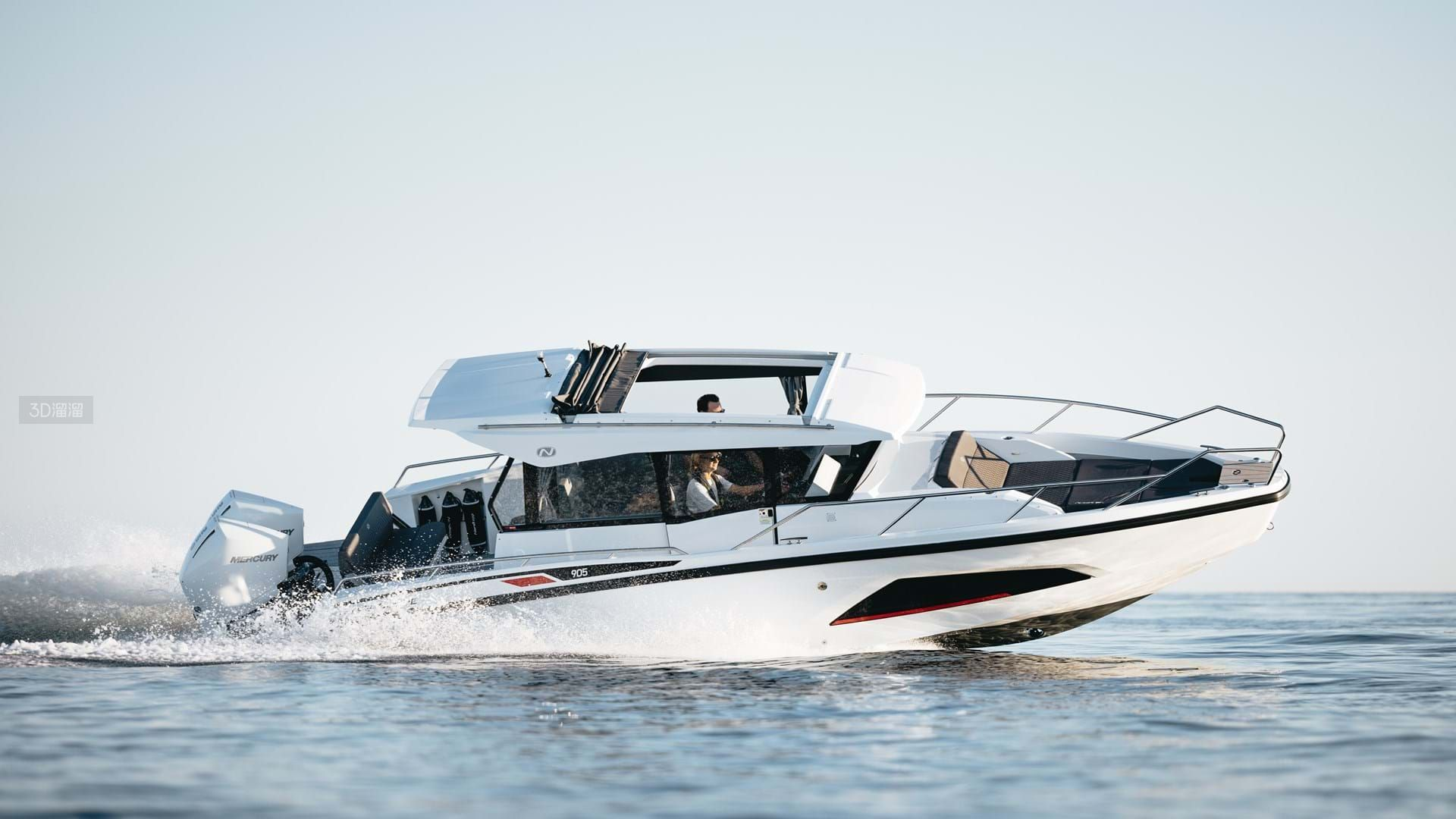
High-performance hulls are frequently built as carbon fiber sandwich structures with foam or honeycomb cores. The skins carry tensile and compressive loads while the core provides thickness and stiffness with minimal weight. Decks and superstructures use the same principle, and because composite panels can be molded into complex shapes, designers gain freedom to create aerodynamic and hydrodynamic forms that would be difficult or impossible in metal.
Masts, Rigging, and Sail Handling Systems
Racing yachts led the way with carbon fiber masts, booms, and spars, and the technology has since spread into cruising yachts and commercial sailing vessels. Carbon fiber mast tubes reduce weight aloft, lower pitching moments, and allow taller rigs within the same stability envelope. Foils, rudder stocks, and sail handling hardware follow the same logic, where stiffness under load directly translates into control and speed.
Propellers, Shafts, and Running Gear
Carbon fiber composite shafts offer a compelling combination of low weight, high torsional stiffness, and natural damping of vibration. Reduced shaft weight lowers bearing loads and drivetrain stress, while composite propellers and waterjets can be tuned for specific hydrodynamic profiles. In naval applications, these components also contribute to reduced acoustic signature, a persistent priority for stealth-sensitive platforms.
Interior, Ballast, and Secondary Structures
Below decks, carbon fiber and aramid composites serve in bulkhead reinforcement, stiffeners, equipment mounts, and ballast tank structures. Aramid fiber, in particular, is valued in marine work for its impact resistance and toughness, often combined with carbon fiber to balance stiffness with damage tolerance. Hybrid laminates of carbon and aramid are common where both rigidity and survivability are required.
Building Reinforcement and Repair in Marine Environments
Not every carbon fiber application involves a new vessel. Marine infrastructure and older ships benefit heavily from composite reinforcement and repair. Concrete piers, quay walls, and dry dock structures degrade rapidly in salt water and tidal cycling. Carbon fiber fabric and carbon fiber plate bonded to concrete surfaces restore structural capacity without adding weight or requiring major demolition, and they do not corrode the way steel reinforcement does.
On steel and aluminium vessels, carbon fiber patches and wraps can repair local cracking, reinforce fatigue-prone details, and extend service life between dry dockings. The ability to apply reinforcement in situ, often with the vessel afloat, is a significant operational advantage for owners who cannot afford long layups.
Why Corrosion Resistance Changes the Economics
Salt water is relentless. Steel demands coatings, anodes, and constant inspection, and even well-maintained hulls eventually corrode. Aluminium fares better but still suffers in the presence of chlorides. Carbon fiber composites do not rust, and they resist most marine chemicals and organisms that attack metals.
That single property reshapes maintenance budgets over a vessel's life. Less corrosion means fewer surveys, less repainting, fewer structural repairs, and longer intervals between refits. For commercial operators, where every day out of service has a cost, the reliability of composite structures can matter more than the initial material price.
Supporting the Build: Material Forms and Process Choices
Shipyards rarely buy "carbon fiber" as a single item. A modern composite build draws on a family of material forms, each matched to a manufacturing process.
Fabric, Prepreg, and Infusion
Carbon fiber fabric is the workhorse of hand layup and vacuum infusion, used for hull skins, decks, and secondary bonding. Carbon fiber prepreg, where the fiber is pre-impregnated with a controlled resin content, delivers consistent mechanical properties and is favored for high-performance structures cured in an autoclave or oven. Prepreg reduces variability, which matters when class societies require certification of laminate properties.
Pultruded Profiles, Tubes, and Plates
Pultruded carbon fiber profiles provide uniform, repeatable properties for stringers, stiffeners, and structural connection elements. Carbon fiber tube serves as spars, struts, push rods, and framing members. Carbon fiber plate offers thin, high-stiffness sections for reinforcement and hardware mounting. Because these products are factory-produced, their properties are predictable and easy to document for regulatory approval.
Aramid and Oxidized Fiber Complements
Marine composites are rarely pure carbon. Aramid fabric and aramid fiber add impact resistance and thermal protection, and they are frequently layered with carbon to create hybrid laminates that survive impacts without shattering. Oxidized fiber materials, including oxidized fiber fabric and oxidized fiber felt, contribute flame resistance and insulation, valuable in engine rooms and enclosed compartments where fire safety requirements are strict.
Regulatory and Certification Considerations
Naval architecture is a rule-driven discipline, and carbon fiber structures must satisfy classification societies, flag states, and safety regulators. Designers must demonstrate laminate properties, fire performance, and structural margins through testing and documentation. This is why material traceability matters long before a single ply is laid.
Working with a supplier that provides consistent areal weight, stable fiber alignment, reliable resin content, and batch-level documentation reduces the burden of certification. It also reduces the risk of rework late in a build, when a failed test panel can delay launch by weeks.
Fire Performance and Insulation
Fire safety in enclosed marine spaces is non-negotiable. Composite structures must meet flammability, smoke, and toxicity requirements, and designers often specify flame-retardant and insulating materials for bulkheads and machinery spaces. Oxidized fiber and aramid materials are commonly used here, either as standalone barriers or as part of a hybrid composite system that balances structural and fire performance.
Impact, Fatigue, and Damage Tolerance
Composites can be strong yet brittle, so damage tolerance must be engineered deliberately. Hybrid layups, tough resin systems, and careful ply sequencing all improve survivability. Designers also plan for inspectability, since internal damage in a laminate is harder to detect than a crack in steel. Ultrasonic inspection and other non-destructive methods are now routine in composite shipbuilding.
Emerging Directions in Marine Composites
The marine industry is under pressure to cut emissions, and lightweighting is one of the few levers that improves efficiency without compromising capability. Hydrofoil ferries, electric and hybrid vessels, and autonomous platforms all benefit disproportionately from reduced structural weight, because every kilogram saved buys range or battery capacity.
Wind-assisted propulsion is returning to commercial shipping, and that revival depends on composite masts, rotors, and sail structures that can survive harsh open-ocean loads. Meanwhile, naval programs continue to invest in composite hulls and superstructures for signature reduction and survivability. Across these programs, the demand is not simply for lighter material but for material that can be certified, inspected, and repaired reliably over decades of service.
Choosing a Carbon Fiber Partner for Marine Projects
Marine projects are long, capital-intensive, and unforgiving of material inconsistency. A supplier that understands shipbuilding requirements can make the difference between a build that sails on schedule and one that stalls in certification.
Shanghai Tanchain New Material Technology manufactures carbon fiber and aramid materials for demanding industries, including marine and shipbuilding. Our product range covers carbon fiber tow, carbon fiber fabric, carbon fiber prepreg, carbon fiber plate, carbon fiber tube, aramid fabric, aramid fiber, oxidized fiber fabric, and oxidized fiber felt, along with finished composite components. We support naval architects, yards, and repair specialists with technical data, batch traceability, and dependable lead times.
Conclusion: A Lighter, Longer-Lasting Fleet
Carbon fiber composites are reshaping shipbuilding by attacking weight, corrosion, and fatigue at the same time. From racing yacht masts and hydrofoil ferry hulls to naval superstructures, pier reinforcement, and in-service repair, carbon fiber materials offer a combination of performance and durability that traditional metals struggle to match. As the industry pursues efficiency, emissions reduction, and longer vessel life, composites will move from the racing fringe into the mainstream of marine engineering.
If you are planning a marine project and want to explore the right carbon fiber and aramid materials for your design, our team is ready to help. Browse our carbon fiber fabric, prepreg, plate, and tube products, or contact us directly for technical guidance and a tailored quotation. Choosing the right carbon fiber partner today can make a measurable difference in the weight, efficiency, and service life of your next vessel.