


-
Carbon Fiber Applications in Elevators and Vertical Transportation
-
How carbon fiber composites, aramid fiber and pre-oxidized fiber are used in lifts and escalators - suspension belts, car frames and panels, doors, machine room components, fire barriers and protective textiles - and how to specify, test and source them.
An elevator is a machine that spends its whole life fighting its own weight. Every kilogram of car, frame, door and rope must be accelerated, braced and braked thousands of times a year, and every kilogram of counterweight must be suspended above the shaft. That is why the vertical transportation industry has quietly become one of the most interesting markets for carbon fiber composites: once the moving mass drops, motor size falls, energy consumption falls, rope and sheave life lengthens, and the whole machine gets faster and simpler at the same time. This article looks at where carbon fiber, aramid fiber and pre-oxidized fiber are used across lifts, escalators and the wider vertical transportation industry, and how a buyer or engineer should specify them.
What This Article Covers
The kinematics of weight in vertical transportation
Why moving mass decides everything else
Where conventional machine design hits a wall
What the industry needs from a material
Carbon fiber suspension members and belts
Composite ropes and flat belts
Lightweight traveling cables
Governor and safety rope options
Car structures, sling frames and platforms
Car frames and platform panels
Doors, sill and landing furniture
Home lift and machine-room-less packages
Machine room equipment and drive components
Motor housings, brackets and drive shafts
Sheave rims and guide components
Escalator components and moving walks
Fire, thermal and safety material duties
Fire-testing realities for car interiors
Pre-oxidized fiber in brake and thermal duties
Aramid fiber in impact and burst protection
Materials selection matrix for vertical transportation
Matching product form to duty
Reading the matrix
Specification, testing and certification
Standards, codes and the paper trail
Fatigue, bend and traction testing
Inspection over a long service life
Why Tanchain for vertical transportation programs
1. The Kinematics of Weight in Vertical Transportation
Start with the arithmetic of a counterbalanced lift. The traction motor only has to move the difference between car mass and counterweight, plus the passengers. Reduce the mass of the car and the sling, and the counterweight can be reduced by the same amount, so the motor, brake, sheaves, guide rails and structural loads all scale down together. A saving of a few hundred kilograms in the moving assembly becomes a saving of well over a tonne in the overall machine.
1.1 Why Moving Mass Decides Everything Else
Energy consumption, peak current, brake size, rope diameter and shaft headroom are all downstream of moving mass. In a high-rise building the travelling mass is dominated by the suspension system itself, and in a home lift the travelling mass matters because the entire product must fit into a domestic structure without a machine room. Both ends of the market are pulling in the same direction: lighter structures and lighter suspension members.
1.2 Where Conventional Machine Design Hits a Wall
Steel rope is a mature solution and will not disappear, but it has a fixed relationship between diameter, breaking load and mass per metre. Taller shafts mean longer ropes, and a longer rope not only weighs more, it stretches more and needs more traction. At some shaft height the rope mass alone becomes a meaningful share of the load. Steel car frames are strong but heavy, aluminium trims weight but is soft and fatigue sensitive at joints, and both materials need corrosion protection in damp shafts and marine environments.
1.3 What the Industry Needs from a Material
The ideal structural material for a lift is stiff, strong, fatigue tolerant, dimensionally stable, non-corroding, non-magnetic and fire compliant. It should also be easy to laminate into frames and easy to machine into brackets. Carbon fiber reinforced polymer covers most of that list, and the two gaps it leaves, namely temperature performance in a shaft fire and impact behaviour in some components, are filled by pre-oxidized fiber and aramid fiber respectively.
2. Carbon Fiber Suspension Members and Belts
The most visible carbon fiber success in the industry is not a car panel or a door. It is the flat belt that suspends the lift, and the family of composite tension members that has grown up around it.
2.1 Composite Ropes and Flat Belts
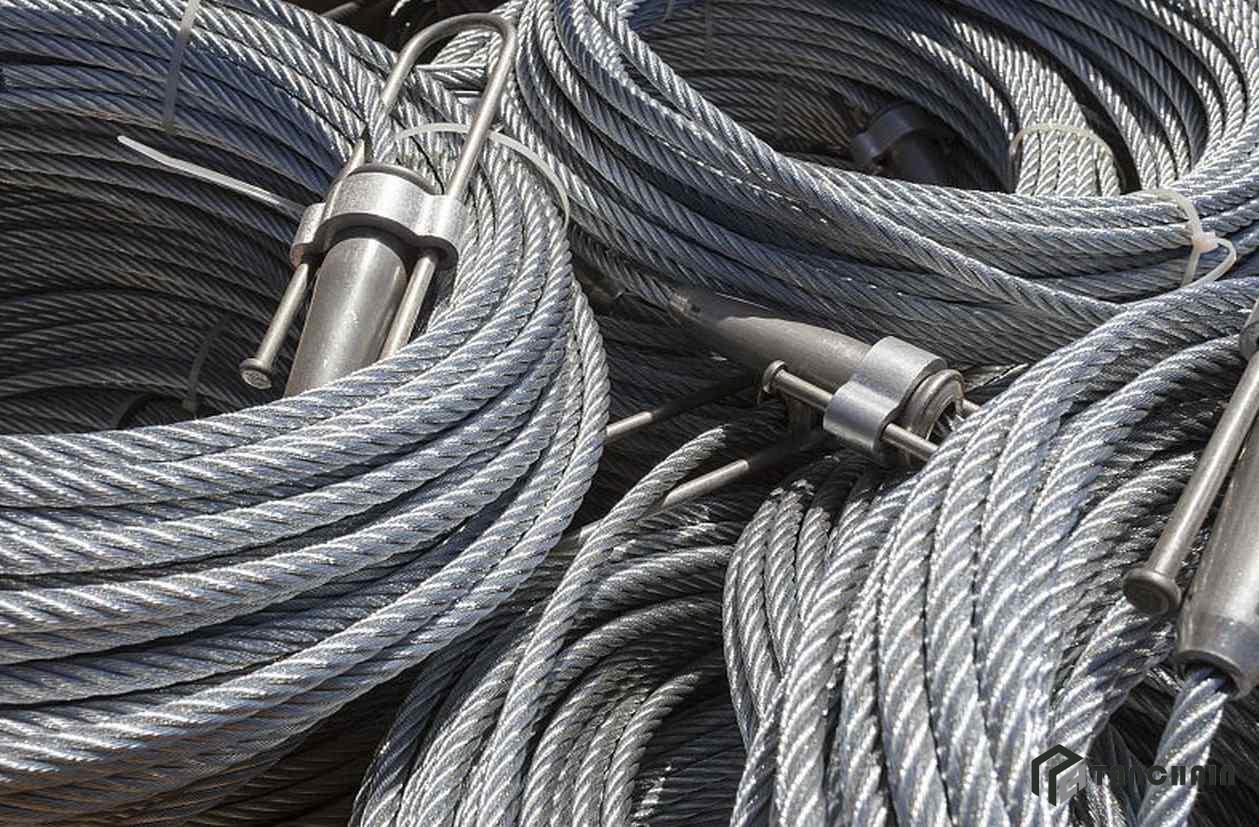
A coated steel belt with a core of carbon fiber tension members replaces several conventional ropes with a single flat element. The carbon fiber core carries the load with very little stretch, which allows a smaller traction sheave and a smaller motor, and the urethane jacket provides traction and protects the core from wear. Because the belt is far lighter than the steel it replaces, the energy needed to move the suspension system itself falls, and the belt lasts well in a properly aligned machine-room-less installation.
2.2 Lightweight Traveling Cables
The travelling cable that follows the car carries power and communication to a moving mass, so its own weight is a penalty that shows up as extra drag, chafing and fatigue at the bend radius. Cable designs that use high-strength fiber strength members reduce mass and improve flex life, and aramid fiber is a common choice where toughness matters as much as stiffness. Reducing traveling cable mass also reduces the counterweight that has to be provided to compensate for it.
2.3 Governor and Safety Rope Options
Safety and governor systems are governed by codes and approvals, so composite substitution is slower there than in structural parts. Where a composite tension member is used, the critical requirement is documented creep and fatigue behaviour under sustained load, because a suspension element that relaxes over a decade is not acceptable. Suppliers working on these parts provide creep rupture data, tension-tension fatigue curves and bend-over-sheave results rather than only a short-term breaking load.
3. Car Structures, Sling Frames and Platforms
Above the belt and around the doors is a second, larger opportunity. Every panel and frame removed from the car reduces the load on the suspension and the guide rails.
3.1 Car Frames and Platform Panels
Car slings and platforms are laminated or pultruded structures, and carbon fiber plate, tube and pultruded profile allow a stiff frame with wall thicknesses far below a steel equivalent. The higher specific stiffness means deflection under load is controlled with less material, and the non-corroding surface keeps the structure stable in a damp shaft. Sandwich panels with carbon fiber skins and a fire-rated core give a flat, rigid platform and wall panel that also carries the interior finish.
3.2 Doors, Sill and Landing Furniture
Car and landing doors are among the most cycled parts of any installation. A carbon fiber door panel is light enough to reduce operator and motor duty and stiff enough to stay flat after years of use, and the composite structure does not dent or rust like sheet steel. Landing sills, indicator panels, handrails and shaft furniture benefit from the same combination of stiffness, low mass and corrosion immunity, and the non-magnetic nature of the material avoids interference with position sensing.
3.3 Home Lift and Machine-Room-Less Packages
In the residential and small commercial segment the constraints are different and the case for composites is even clearer. A home lift must go into an existing staircase, needs a compact drive and a light car because the supporting structure was never designed for a lift. Carbon fiber tubes and machined plates let a manufacturer build a slim, self-supporting frame that can be assembled on site, and pre-oxidized fiber components handle the insulation and fire barrier duties around the drive and the car panels.
4. Machine Room Equipment and Drive Components
The machine room, or the compact machinery space of a machine-room-less lift, contains rotating and reciprocating parts where reduced inertia and corrosion resistance both pay.
4.1 Motor Housings, Brackets and Drive Shafts
A carbon fiber drive shaft reduces rotational inertia and raises the first bending natural frequency, which helps a gearless traction machine run quietly. Motor frames, mounting brackets and machine bedplates in carbon fiber reduce mass on the shaft head structure and remove the need for painting and galvanising. Because the material is not magnetic, it can be used close to the magnetic circuit without distortion of the field.
4.2 Sheave Rims and Guide Components
Guide shoes, roller guide housings, and the structural elements of a sheave assembly are candidates for carbon fiber where stiffness and low mass matter. Rollers and guide components benefit from aramid fiber in wear and impact layers, since aramid is exceptionally tough and non-abrasive to the rail surface. Both materials are at home in a shaft environment because neither corrodes when condensation forms on a cold morning.
4.3 Escalator Components and Moving Walks
Escalator balustrades, step and pallet components, handrail guidance structures and comb plate furniture all run for decades in public buildings where both appearance and maintenance cost matter. Carbon fiber profiles and panels give a stiff, light and stable structure, while aramid fiber adds impact tolerance at exposed points and pre-oxidized fiber provides the fire barrier behind cladding and around drive components.
5. Fire, Thermal and Safety Material Duties
Vertical transportation is a life-safety product, so material decisions are constrained by codes and by the consequences of a failure. Composite materials answer those constraints when the specific grade and test evidence are chosen deliberately.
5.1 Fire-Testing Realities for Car Interiors
Car walls, ceilings, floors and doors are subject to fire performance requirements, and the composite solution is a system rather than a single material. A carbon fiber skin can be combined with a fire-rated core and an intumescent or mineral layer, and pre-oxidized fiber facings can be added where non-combustibility counts. The key is to test the assembly as it will be installed, because a laminate that passes alone may not pass with the adhesive and finish used in production.
5.2 Pre-Oxidized Fiber in Brake and Thermal Duties
Pre-oxidized fiber is a non-melting, flame-resistant material that does not burn or melt at service temperatures, and it is used as brake pad reinforcement, as thermal insulation around machine components, as a barrier behind panels and as felt inside the machinery space. It also holds up well in the dusty, vibrating conditions of an escalator truss, where mineral wool can settle and compress over time.
5.3 Aramid Fiber in Impact and Burst Protection
Where a failure would release energy, aramid fiber earns its place as an energy-absorbing layer. It is used in protective liners around drive equipment, in impact protection for exposed shaft furniture, and in containment wraps for pressurised or high-energy components. Aramid fabric is also a natural choice for soft equipment such as lifting slings, sling covers and protective blankets used during lift installation and refurbishment, where a metal part must not scratch a finished car interior.
6. Materials Selection Matrix for Vertical Transportation
The matrix below maps the duty point in a vertical transportation system to the product form that suits it and the conventional material it usually replaces.
| Duty point | Recommended product form | Primary reason | Typical conventional choice |
|---|---|---|---|
| Suspension belts and tension members | Carbon fiber filament and pultruded core element | Low stretch, low mass, high fatigue life | Steel rope sets |
| Travelling cables and control lines | Aramid fiber strength member in flexing cable | Toughness and flex fatigue resistance | Steel or glass fiber members |
| Car sling and platform structure | Carbon fiber tube, plate and pultruded profile | Stiffness per kilogram | Welded steel frame |
| Car wall, ceiling and floor panels | Carbon fiber laminate over fire-rated core | Flat, light, corrosion free | Painted steel or laminate |
| Car and landing doors | Carbon fiber sandwich panel and edge profile | Cycle life and dimensional stability | Sheet steel doors |
| Machine bedplate and motor brackets | Carbon fiber machined plate and pultruded profile | Mass reduction and no corrosion protection | Cast iron or welded steel |
| Drive shaft and rotating components | Carbon fiber tube and machined coupling | Low inertia, high natural frequency | Steel shaft |
| Guide shoes, rollers and rail furniture | Aramid fiber wear layer with carbon fiber housing | Toughness without rail damage | Steel or nylon guide parts |
| Fire barriers and interior linings | Pre-oxidized fiber felt, fabric and facing | Non-melting, non-combustible barrier | Mineral wool and steel sheet |
| Brake pad and thermal shielding | Pre-oxidized fiber reinforcing and felt | Stable friction and heat resistance | Asbestos-free composite pad |
| Installation slings and protective covers | Aramid fiber webbing, sling and blanket | High strength, soft, non-marring | Steel chain and nylon sling |
6.1 Reading the Matrix
Read each row as a package rather than a single purchase. The product form, the reason it is chosen and the conventional solution it replaces belong together, and most installations combine several rows at once. The commercial value of a single supplier is greatest when belts, structural profiles, panels, felts and protective textiles arrive with consistent documentation and coordinated delivery, because the lift is assembled in a fixed sequence and a missing item stops the whole build.
7. Specification, Testing and Certification
Vertical transportation is regulated, and composite materials enter the industry through the door marked test evidence. A supplier who understands that will make the buyer's approval process shorter.
7.1 Standards, Codes and the Paper Trail
Composite parts for lifts are qualified against the applicable lift safety standard for the region and against material and fire standards for the assembly as a whole. In practice, a project package includes material certificates with batch traceability, mechanical and physical test reports, fire test reports for the finished assembly, and where relevant creep and fatigue data. Consistency between certificates and production lots matters as much as the numbers themselves, because a substitution in the supply chain can invalidate an approval.
7.2 Fatigue, Bend and Traction Testing
A suspension element in a lift might see millions of load cycles over its life, and a door might cycle hundreds of times a day for two decades. Testing therefore focuses on tension-tension fatigue for suspension members, bend fatigue over the sheave diameter actually used, and cycle testing of hinges, rollers and latches on moving panels. Traction and wear testing of a coated belt is done on the real sheave geometry, because belt life is a system property rather than a material property.
7.3 Inspection Over a Long Service Life
Composite components are inspected by visual examination, tap testing and, where applicable, ultrasonic or radiographic methods. The most useful deliverable at handover is a documented baseline: material batch records, as-built drawings, alignment and torque records and photographs of critical joints. With a baseline in hand, every subsequent inspection becomes faster and every decision about repair or replacement becomes evidence based rather than a guess.
8. Why Tanchain for Vertical Transportation Programs
A vertical transportation project needs one material partner able to cover structural, suspension and safety duties without losing consistency between them. Tanchain manufactures carbon fiber filament, staple fiber, fabric, prepreg, pultruded tube, profile and machined plate for the composite frame, panel, belt core and drive component scope, together with aramid filament, staple fiber and fabric for impact, wear and protective textile duties, and pre-oxidized fiber staple, filament, yarn, felt and fabric for high-temperature insulation, brake reinforcement and fire barriers.
That range means a single purchase order can cover a car sling, an interior panel set, a machine bedplate, a belt core specification, a fire barrier felt and a set of installation slings, with consistent documentation and coordinated scheduling. Material certificates, batch traceability and technical data are provided as standard, and our team supports the specification stage with product selection and application guidance.
Browse the Tanchain carbon fiber, aramid fiber and pre-oxidized fiber product range, or send us a car layout, shaft data and duty cycle. Our engineering team will review the moving mass, the suspension arrangement and the fire and safety requirements, recommend the product forms for each section of the system, and provide a complete material package for the vertical transportation application, from the suspension member to the insulation behind the car panel.